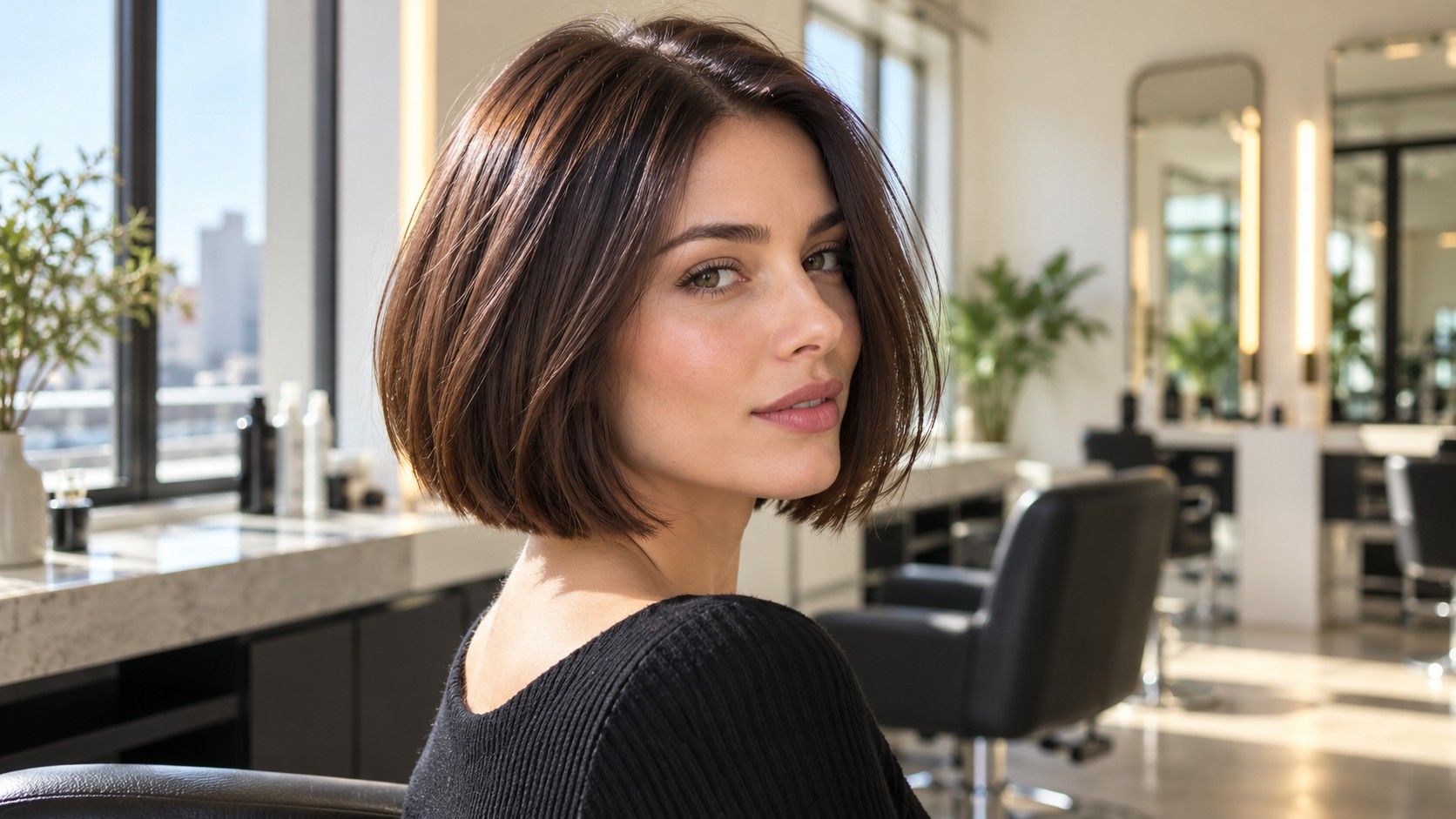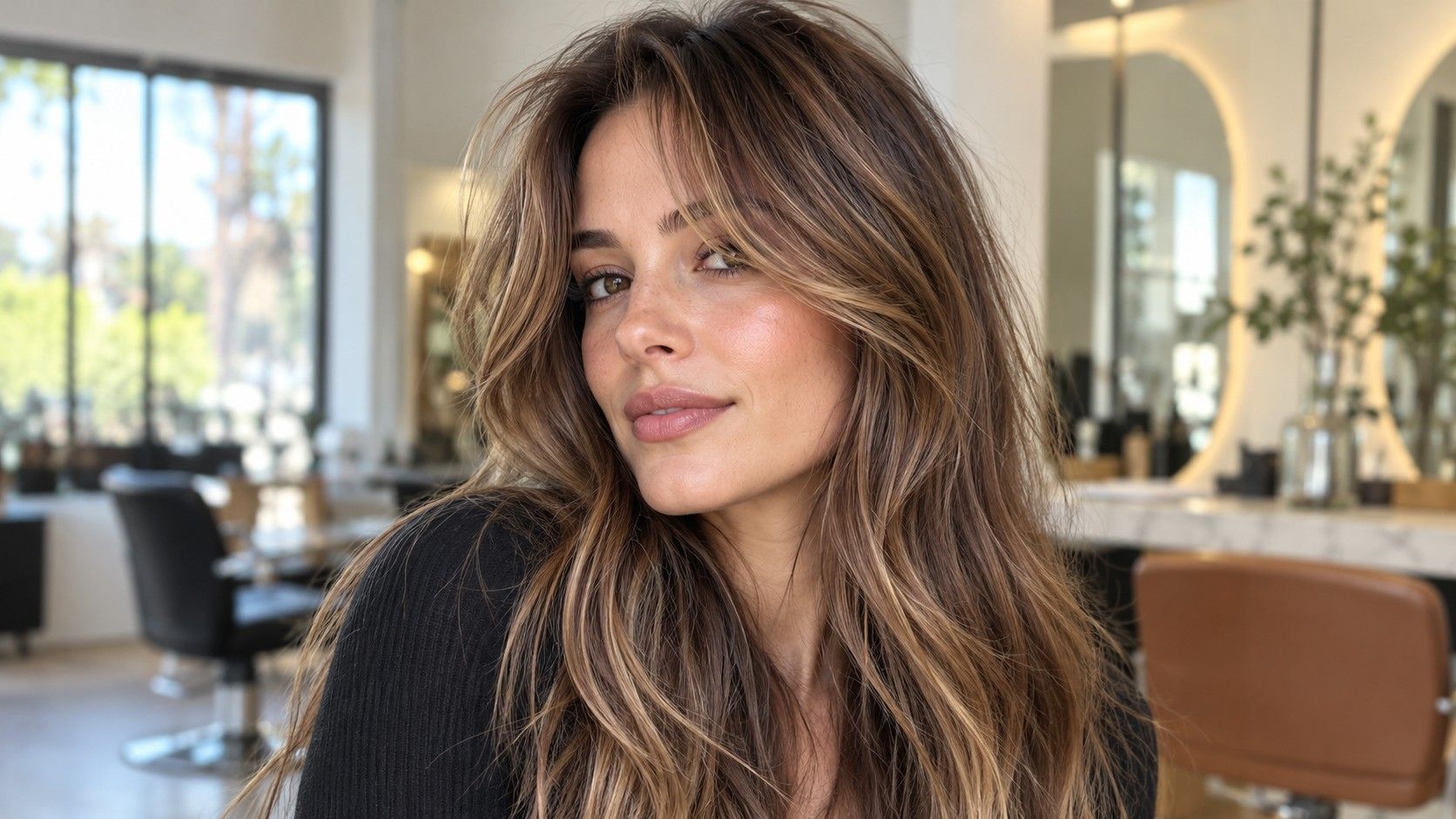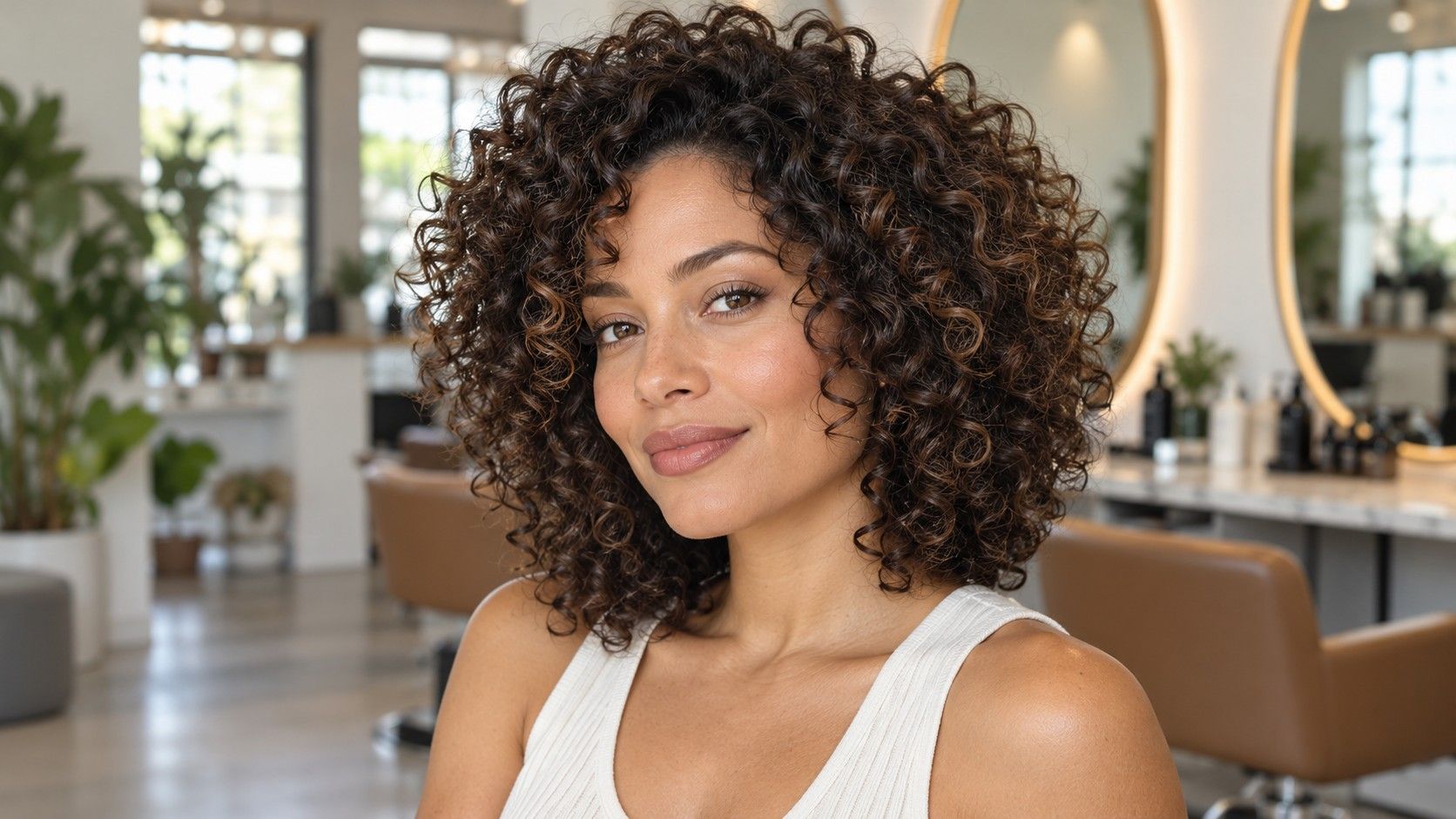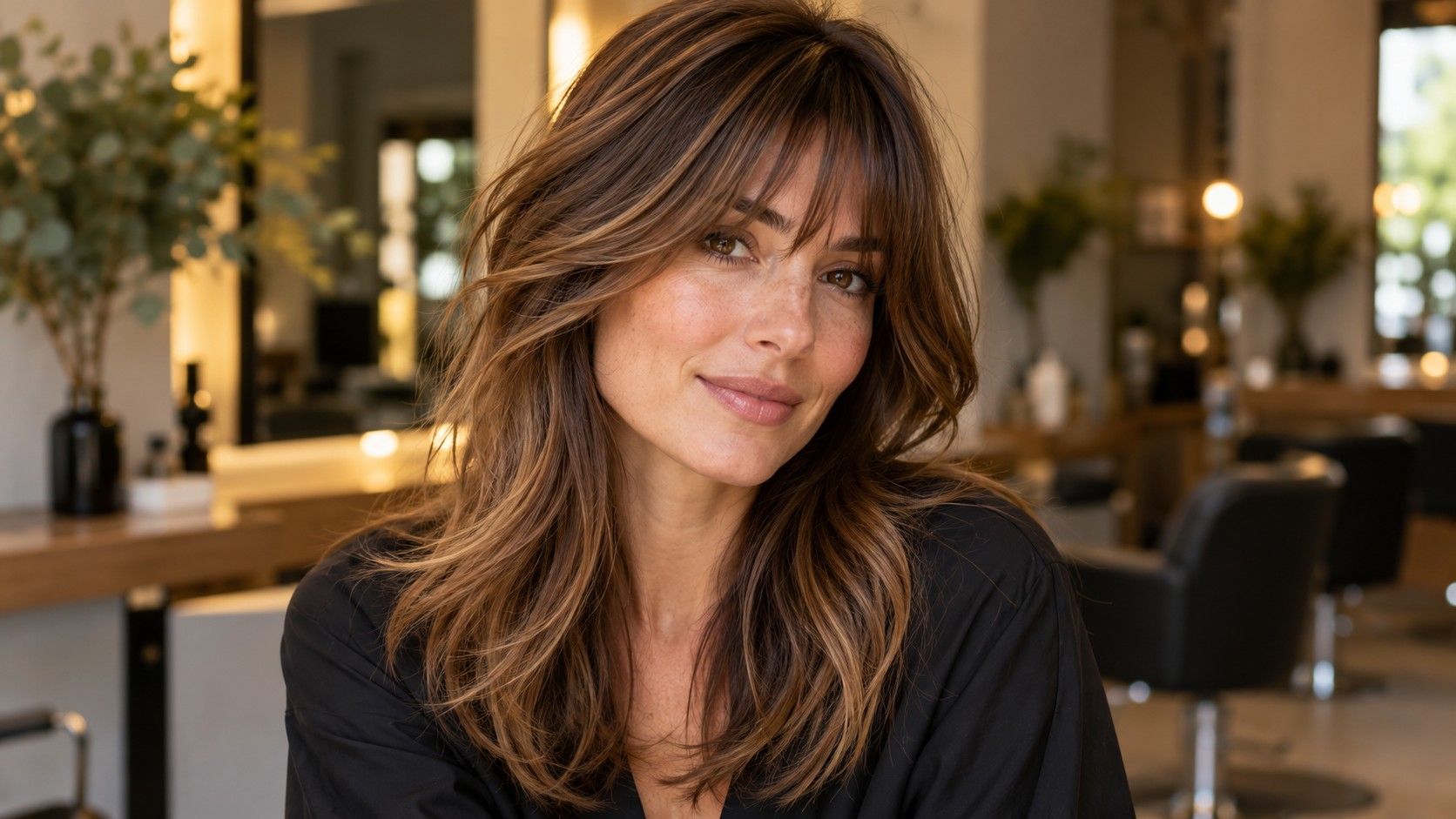
Face shape can help describe the look you want, but hairline, texture and styling time decide whether bangs feel workable. Instead of following a rigid face-shape chart, compare fringe shapes by their length, density and movement. These practical details make a better starting point for a salon conversation.
Start with your hairline and daily routine
Choosing bangs starts with the hair, not a chart that assigns one fringe to each face shape. Notice where the hairline begins, whether a cowlick splits the front, how much density sits at the temples and what happens when the hair air-dries. Those details affect whether a fringe stays forward, opens into curtains or needs a few minutes of direction each morning.
Your routine is a useful filter. If you already dry the front section, a shaped fringe may fit easily. If you usually wash and go, consider a longer or more forgiving design that can blend into face-framing layers. Ask how the bangs will behave on a second-day refresh, during exercise and in humid weather. The salon finish is only one version of the haircut.
Face shape can help describe proportions, but it is not a correction assignment. Forehead height, cheekbones, jaw and preferred parting can guide where the fringe begins and ends. You do not need to hide a feature. A better question is which outline you enjoy seeing in the mirror and whether the maintenance matches your week.
Bring photos of people with similar hair texture and density, then explain what you like in each. One photo might show the length, another the amount of separation. Ask the stylist to translate those details into a cut for your hairline. Reference images are prompts for discussion, not guarantees of an identical result.
When does blunt or straight-across fringe make sense?
A blunt fringe creates a distinct horizontal line and can make the eyes the focus. It is often easiest to read on straight or gently wavy hair, where the edge lies clearly. A dense section can feel substantial and may need regular trims to keep clear of the eyes. If your hair curls or springs up, leave room for shrinkage before choosing a short length.
For a round face shape, people sometimes hear that a certain bang is forbidden or required. That rule is too rigid to be useful. If you like a full fringe, discuss its width, length and whether the corners should soften into the sides. Those decisions alter the impression more than a label. Comfort and styling preference should have equal weight.
A straight-across line can be less cooperative when a strong cowlick lifts the center or pushes one side apart. The stylist may leave the center longer, cut a lighter section or suggest a side-swept alternative. Ask to inspect the hairline dry before committing to a short edge. A few millimeters can change whether the fringe rests or jumps.
Blunt bangs also need a plan for growth. As they lengthen, they may sit at the brow or separate unevenly. Find out whether the stylist can soften the line later and how often you would need a cleanup. If frequent appointments do not suit you, a longer starting length gives more room to adapt.
How do curtain and side-swept shapes differ?
Curtain bangs open around a center or near-center part, with longer sides blending into the haircut. They can be worn more or less divided and usually offer a gradual path into face-framing layers. The center length and section depth matter: a narrow, long curtain feels different from a thick fringe that reaches the brows.
Side-swept bangs move across the forehead from a part and can keep more hair on one side. They may be helpful if your natural part already falls that way, but a strong cowlick can affect the direction. Ask where the shortest point will sit and how the fringe will look if you switch your part. Hair rarely follows a reference image if the roots are trained elsewhere.
For a square face shape, some people prefer a softer diagonal line or pieces near the cheekbones. That is an aesthetic option, not a rule about hiding the jaw. A blunt shape can be equally intentional if you like its graphic edge. Try comparing a side-swept photo and a curtain photo with similar length and texture to see which movement you prefer.
Both shapes can be adapted to fine or dense hair. A deeper section gives more coverage, while a narrow one blends easily. The stylist can leave the sides longer, add soft layers or keep the edge more solid. Describe whether you want the fringe to stand apart from the haircut or disappear into it by the next trim.
What changes with straight, wavy and curly hair?
Straight hair makes the cutting line visible and may need a little root direction to keep a center part from splitting. Fine strands can separate, so lightweight product and a modest section may work better than a thick, heavy fringe. Density is different from strand thickness: fine strands can still be plentiful, and coarse strands can exist at lower density.
Wavy hair may bend away from the face on one side and toward it on the other. A fringe that looks symmetrical when wet can dry unevenly. Ask the stylist to consider your natural wave and whether dry cutting or a final dry adjustment makes sense. A diffuser or quick blow-dry can help, but only choose that shape if the styling fits your routine.
Curly hair shrinks and forms clumps, so the apparent length changes as it dries. A curl-aware stylist can discuss cutting dry, shaping individual curls or leaving more length initially. Bring a photo of your everyday texture. A smooth, stretched reference can suggest the general outline, but it does not reveal how the fringe will sit in its natural state.
Product and climate also matter. Heavy creams can weigh down a light fringe; dry air can increase static; humidity may restore a wave you smoothed away. Ask which small styling step makes the biggest difference for your pattern. Avoid assuming that every fringe needs daily heat—many can work with finger styling, air-drying or a quick root reset.
How can you test the commitment?
Before booking a full fringe, try a virtual preview, clip-in bangs or a temporary side part. Treat the preview as a rough silhouette check: photo apps may alter lighting, hairline or texture and cannot reproduce movement. A clip-in can show whether you enjoy hair over the forehead, though its density and attachment may feel unlike a real cut.
At the consultation, ask for a staged approach. The stylist might begin with longer curtain pieces, then shorten them at a follow-up after you have tried the shape at home. This is especially useful when your cowlick, curl shrinkage or styling time is uncertain. You can also ask how the fringe will blend if you decide to grow it out.
Consider upkeep before choosing length. Short bangs may need frequent trims and daily direction; longer pieces can be tucked behind the ear while they grow. If you wear glasses, helmets or headbands, test where the hair meets them. A detail that seems minor in the salon can determine whether the fringe stays comfortable during the day.
The best bangs for face shape are the ones that fit your preferred look, texture and actual schedule. Share what you like, what you will not style and how much time you can spend. A clear discussion about length, density and grow-out will usually produce a better choice than trying to follow a universal face-shape formula.