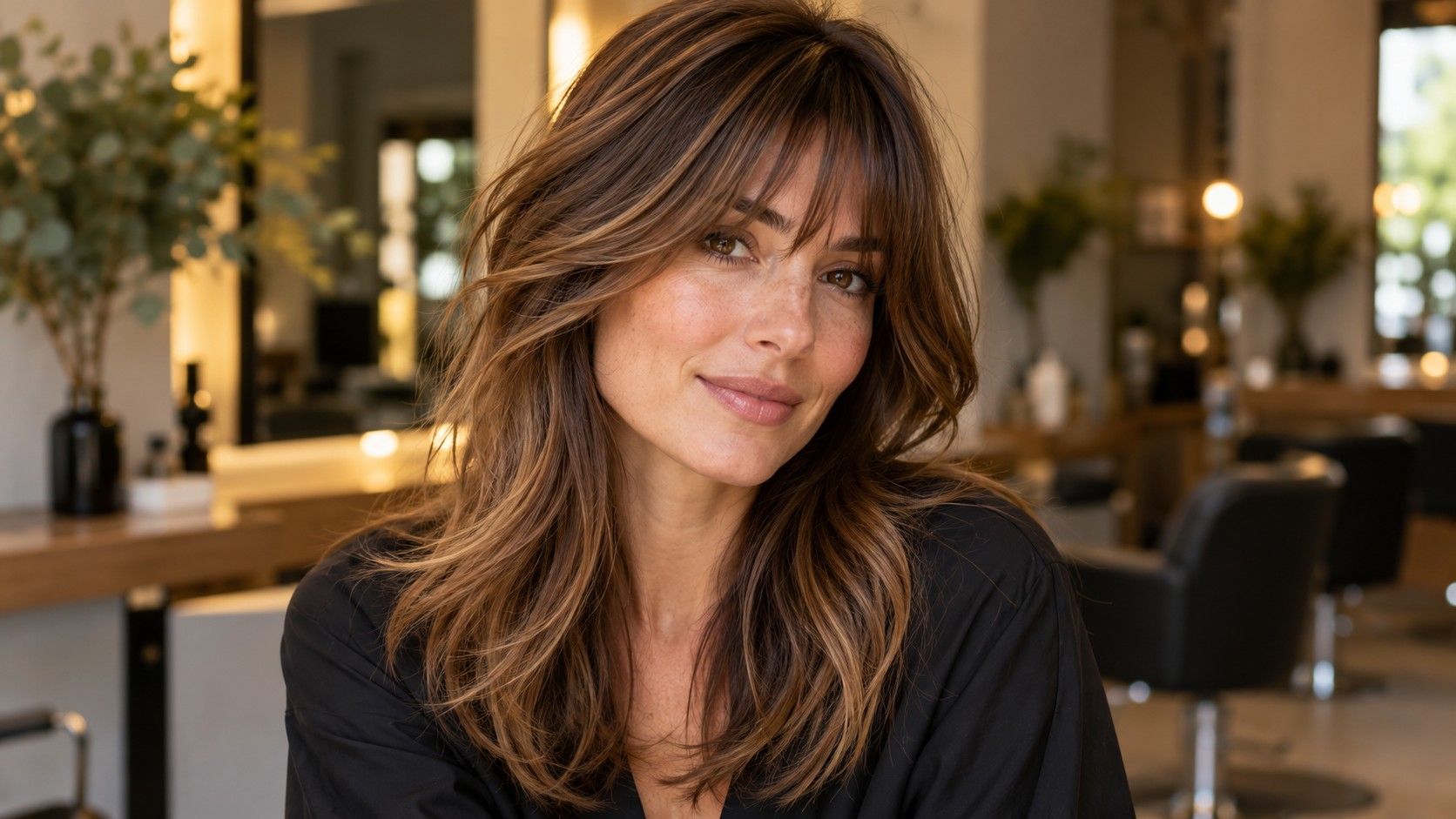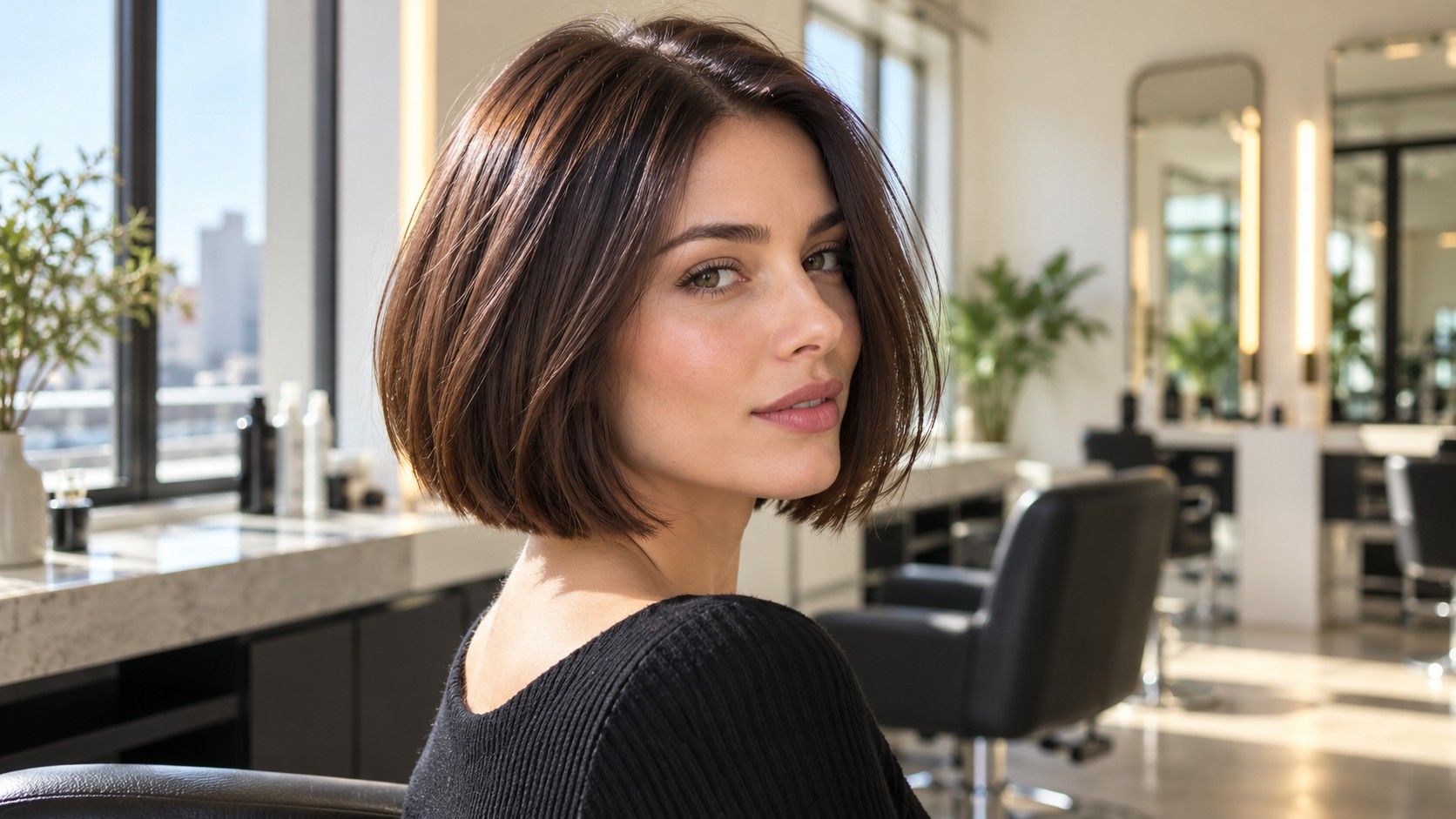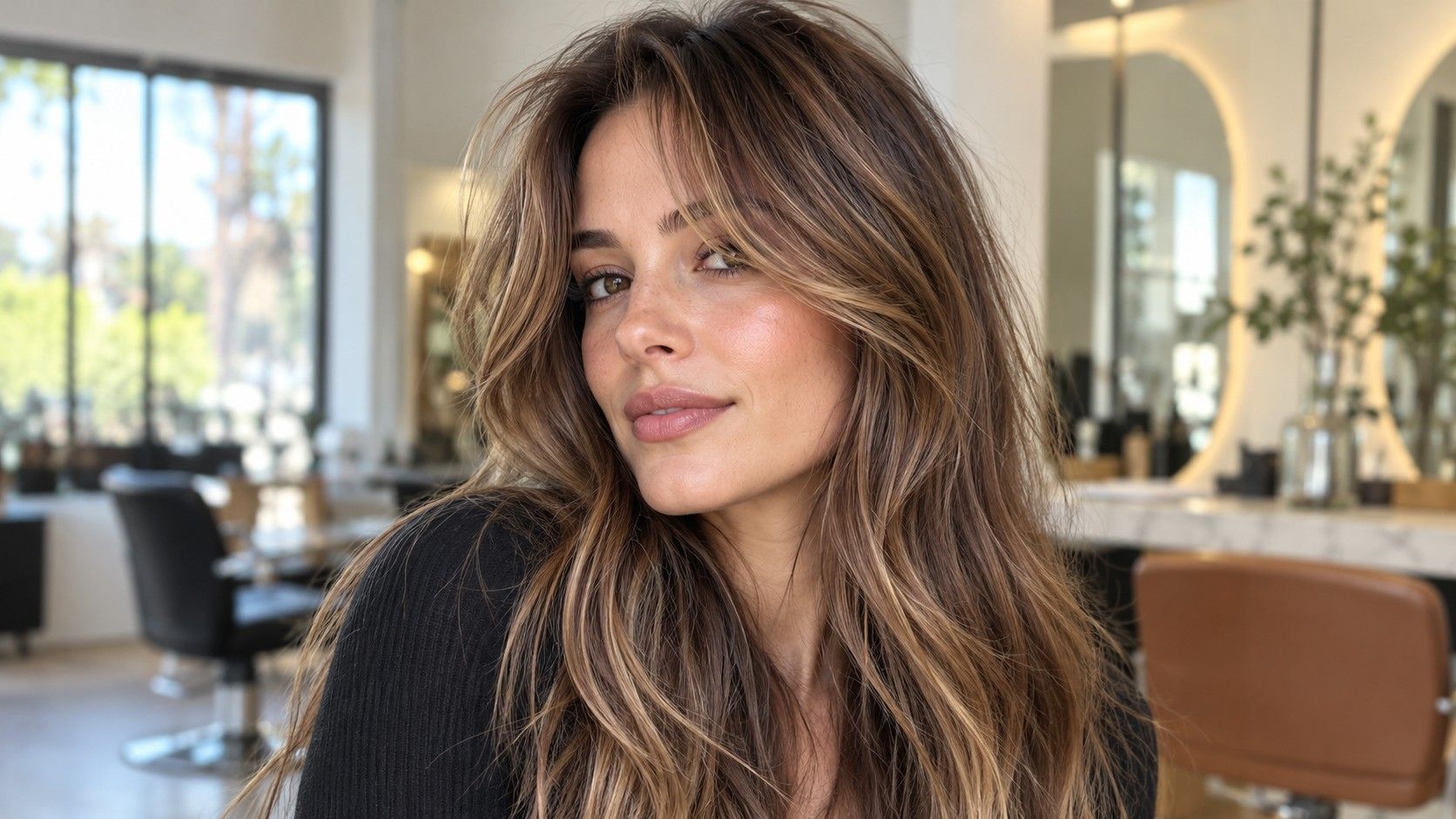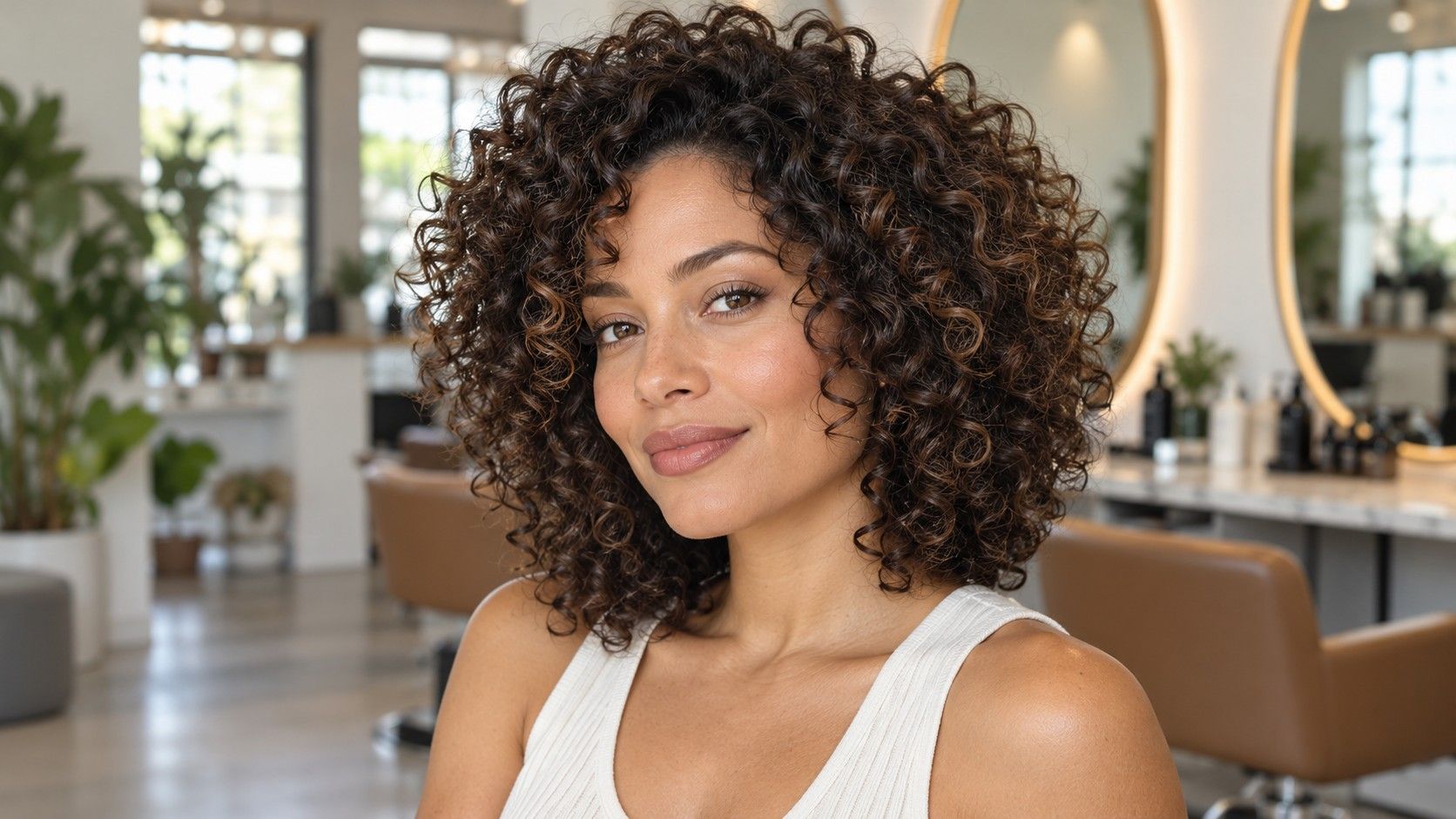
A good curly haircut is judged after it has been washed, dried and lived in for a few days, not only while it is stretched in a salon chair. Curl pattern, density, shrinkage and your usual wash routine all affect the outline. The most useful consultation starts with how you wear your hair on an ordinary morning, then works backward to a shape that supports it.
Plan around what your curls do between washes
Curly hair can change its outline as it dries. One section may form compact curl clumps while another loosens near the crown; the nape may shrink more than the front. That variation is normal, and it is why a photo of your hair on a good day is only part of the reference. Bring a second picture from a typical wash day, and arrive with your hair in its natural state if the stylist asks for it. A stretched blowout can hide the places where the shape expands or collapses.
Before choosing among hairstyles for curly hair, describe your regular routine in concrete terms: how often you wash, whether you diffuse or air-dry, which products you use, and how much time you are willing to spend separating curls. A cut designed around a long styling session may frustrate someone who scrunches in leave-in conditioner and leaves home. The reverse is true too: a very simple outline may not give enough shape to someone who enjoys defining individual curl clumps.
Hair density and curl size matter alongside the pattern. A dense head of fine strands can feel full but collapse under heavy products; fewer coarse strands can form broader curls and need a different balance. Hair porosity may affect how quickly hair absorbs water and dries, but it does not dictate one correct haircut. Ask the stylist to explain what they see in your own hair rather than sorting you into a rigid curl-type label.
Choose layers for movement, not just shorter pieces
Layers for curly hair change where volume sits. Long layers can reduce the heavy, shelf-like effect that sometimes appears when a dense length is cut in one line. Shorter layers may lift the crown and help curls form a rounded silhouette, but they can also create a wider shape at the sides. The useful question is not whether layers are universally flattering; it is where you want the weight to remain and how much width you are comfortable wearing.
A rounded shape often works well when curls spread outward at the lower half. The stylist can preserve length around the perimeter while removing weight inside, so the outline still looks intentional when the curls shrink. A soft shag uses more visible layers and can make natural texture feel lively, though shorter pieces around the face may need refreshing or pinning on days when they do not settle. A long, softly layered shape keeps more length and usually asks less of the fringe area.
Ask to see the intended shape from the front, side and back before much length comes off. Explain whether you tie your hair up; layers that look balanced when loose may leave short pieces escaping a ponytail. If you want a broad, rounded profile, say so plainly. Words like “more shape” mean different things to different people, so a reference photo annotated with the part you like—the crown, perimeter or face-framing pieces—is more useful than a single celebrity image.
Decide length with shrinkage in mind
Shrinkage is the difference between stretched length and the length curls show when dry. It can be modest or dramatic, and even one head can shrink unevenly. If you want curls to reach your shoulders, point to where they should land in their natural state rather than asking for a shoulder-length cut while the hair is wet and stretched. The stylist can estimate the wet-to-dry length from your own curl behavior and leave room to refine the shape.
Short cuts can make curls springier and reduce the weight that pulls them down, but a dramatic change deserves a clear plan for the sides, nape and crown. A chin-length bob may sit higher once dry; a longer bob may keep enough weight to lengthen the curl. For longer hair, the perimeter can look thin if too much internal weight is removed. A small first cut is often easier to adjust than trying to restore length that has already been taken off.
Use a table as a conversation aid, not a promise that every curl behaves the same way:
| Shape to discuss | What it can help with | Check before choosing |
|---|---|---|
| Rounded layers | More even volume around the head | How much width the sides gain when dry |
| Long layers | Movement while keeping a longer perimeter | Whether the ends still look full |
| Curly bob | A lighter outline with visible curl shape | Where the curls land after shrinkage |
| Soft shag | Lift and separation through the crown | How short face-framing pieces will be styled |
Make the consultation specific to your hair
Dry cutting is one approach a curl-aware stylist may use because it reveals the way individual curls sit and lets them shape the outline in its natural state. It is not automatically better in every case. Some stylists combine dry shaping with washing and refining; some prefer a wet cut for particular lengths or techniques. What matters is that the person cutting your hair can explain how they account for shrinkage, uneven curl patterns and your desired finished length.
Ask how much length they expect to remove, whether they will check the shape dry, and what the plan is if one side springs up more than the other. A confident consultation should leave room for your preferences. If you say you do not want short layers around your face, that boundary should be reflected in the plan. Bring photos of cuts you like and one that shows what you want to avoid. A stylist can then identify whether the difference is the perimeter, the crown volume or the way curls frame the cheeks.
It also helps to explain the parts of your routine that cannot change. If you need to tie your hair back for work or exercise, mention that before discussing a fringe. If you rarely use heat, do not choose a shape that depends on a diffuser technique you are unlikely to repeat. A good cut should make your usual routine more predictable, even if it cannot make every wash day identical.
Style after the cut without fighting the curl
On the first wash after a haircut, use the products and drying method you normally rely on before deciding the shape is wrong. Wet curls can look longer and narrower; fully dry curls show the actual volume and perimeter. If you use a diffuser, low or moderate airflow and gentle handling can limit disruption while curls set. For air-drying, avoid repeatedly touching the hair as it dries if you want curl clumps to stay together.
Product weight is worth watching. A rich cream can soften frizz on one head and flatten another, especially near the roots. Start with a small amount, distribute it through wet hair and add more only where the ends need it. A light gel or mousse may help hold definition, but no product will make every curl form the same way. Humidity, water quality and drying time can change the result from one week to the next.
Take a quick note of what worked after two or three washes: where the curls separate, whether the crown keeps its shape, and which pieces need extra attention. That feedback makes the next trim more precise. The best curly haircut is not a fixed formula; it is a shape that respects your curl pattern, leaves the length you asked for and behaves reasonably well with the routine you actually have.