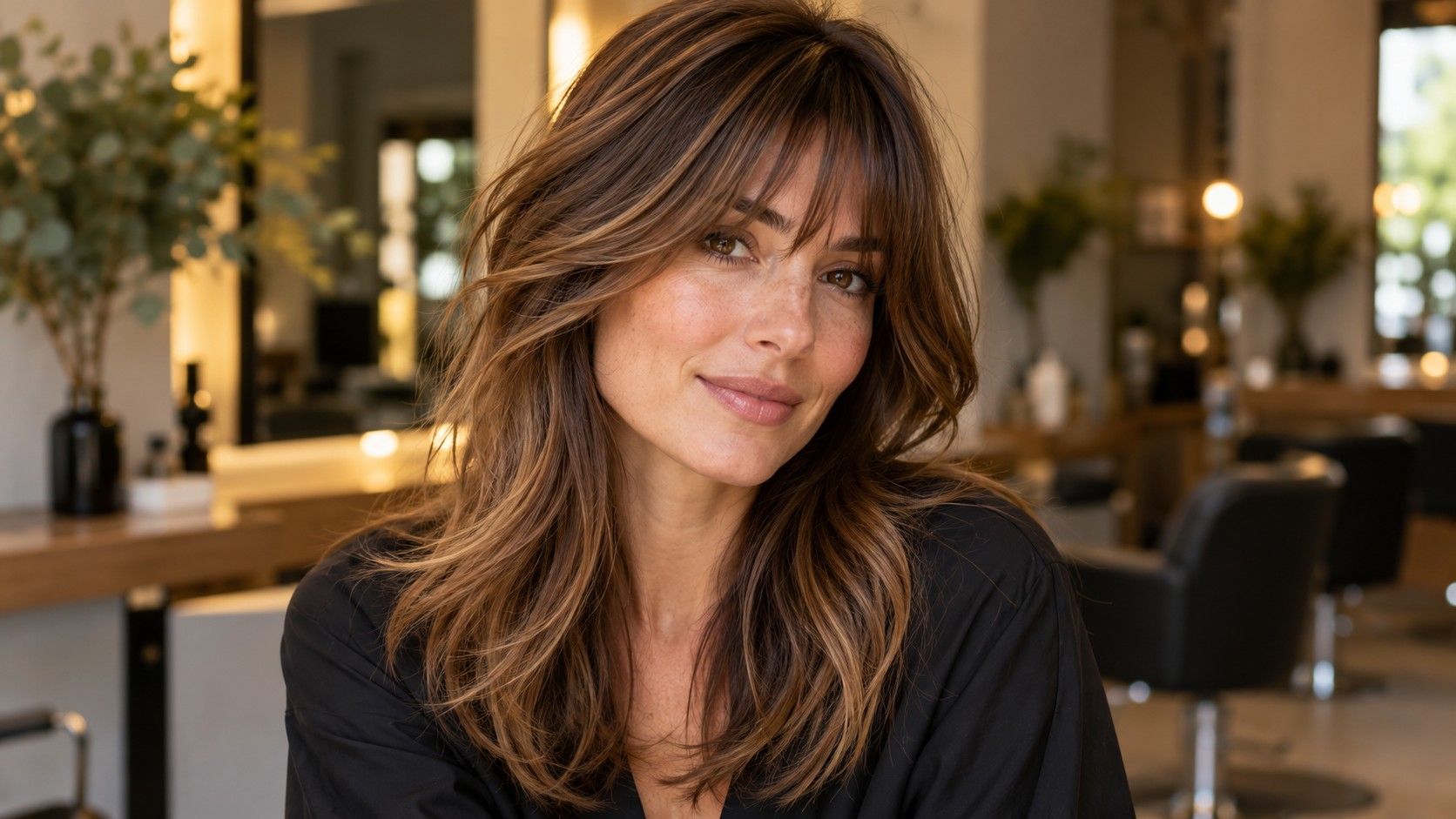
Fine hair describes the diameter of each strand; it does not tell you how many strands grow on your head. Someone can have fine, dense hair that feels abundant, while another person has fine strands with lower density and a more visible scalp. That distinction changes which cut feels right. The aim is to choose a shape that sits well at your natural density and fits the time you want to spend styling, rather than chasing a promise of instant thickness.
Separate fine strands from low density
Fine strands tend to bend, tangle or lose volume more readily, but the overall silhouette also depends on density, length and the way hair grows. If your hair looks full at the crown yet the ends become transparent, the issue may be a long, tapered perimeter. If the part looks wide throughout, a different cut may help frame the hair but will not change how many strands are present. These observations are useful in a salon consultation because “make it look thicker” can mean a fuller edge, more lift at the roots or less scalp showing at the part.
Look at your hair in daylight when it is clean and dry. Note where it separates, where it loses shape by lunchtime, and whether the ends appear sparse after you wear it down. Think about breakage too: short flyaways around the hairline can be new growth or breakage, and repeated heat or tight styling may make the outline uneven. A haircut can tidy that perimeter, but it cannot diagnose or treat a medical cause of hair loss.
For haircuts for thin fine hair, the stylist should know whether you want a compact outline, movement, or enough length to tie back. Bring a photo showing the back and sides, not only a polished front view. Ask what the cut will look like without a round-brush blowout. If a reference depends on extensions or unusually dense hair, the shape may not translate as shown.
Compare lengths by how the ends behave
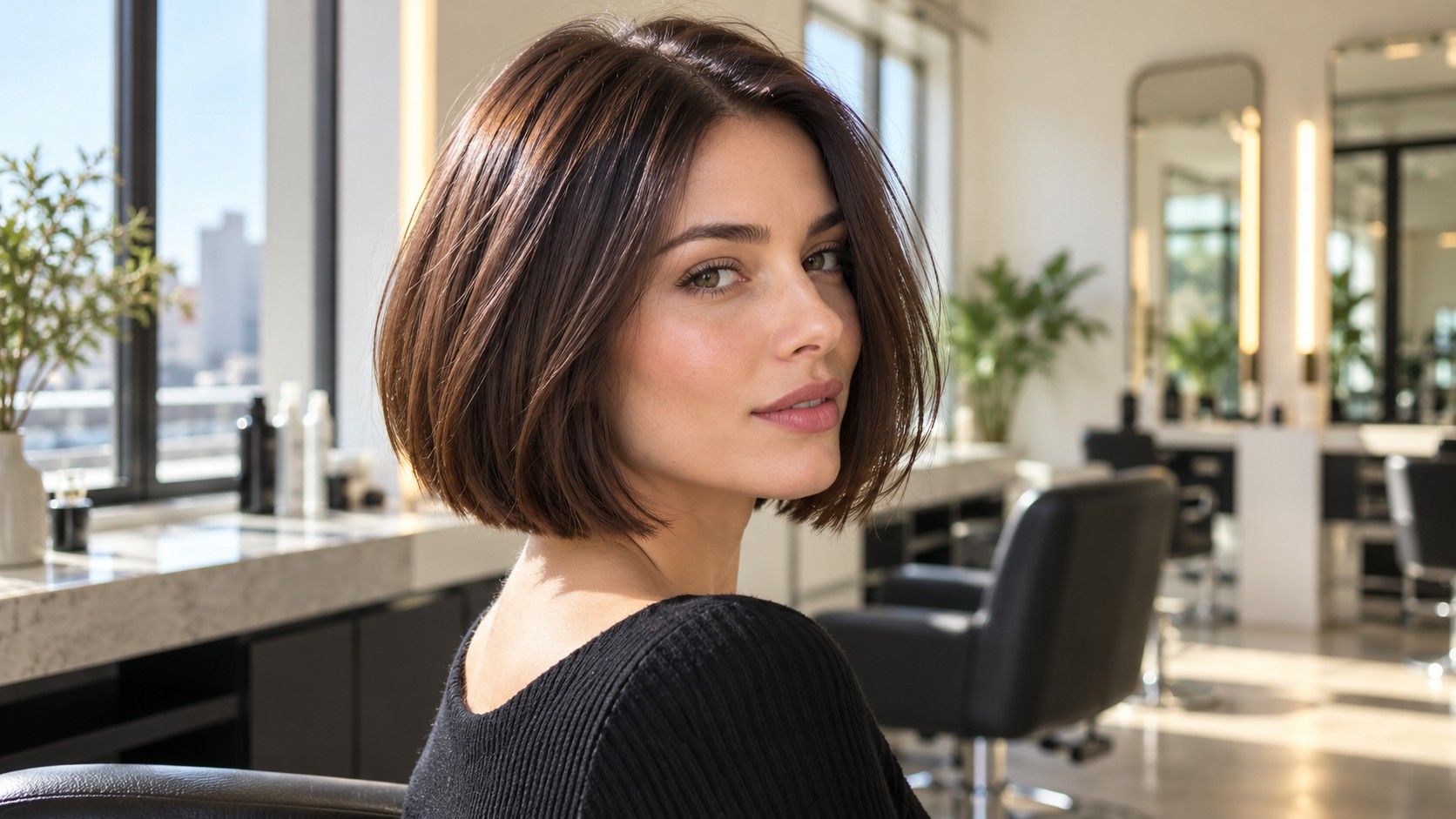
A blunt perimeter can make the ends look more substantial because fewer lengths are removed from the bottom line. A chin-length or collarbone bob is often a useful starting point to discuss: it keeps enough length for movement while reducing the drag that can pull fine hair flat. The best bob for fine hair is not automatically the shortest bob. The right landing point depends on your neck, face-framing preference, cowlicks and whether you want to tuck the hair behind your ears.
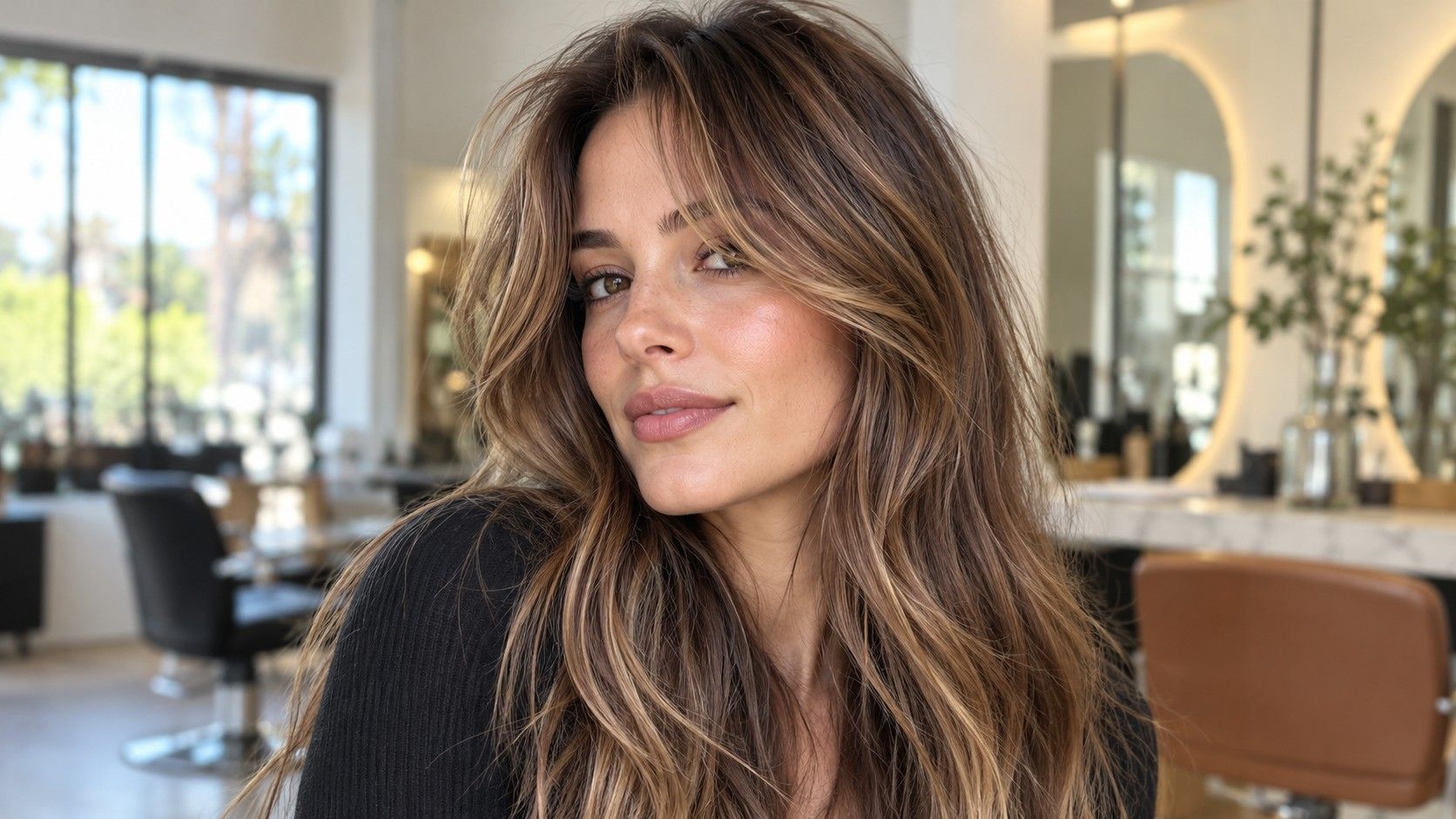
Long hair can still work, especially when the ends are maintained and the strands are not heavily thinned. The trade-off is that more length can reduce root lift and make tangles more noticeable. A stylist might keep the outer line clean and add a few internal layers for motion. If every layer is cut short, the top can feel airy while the bottom loses its visual weight. Ask to see how much length remains at the perimeter before agreeing to substantial layering.
A pixie or cropped cut can create a clear silhouette and reduce the weight that draws fine strands downward, but it asks for regular shaping to keep the outline intentional. A bob usually gives more flexibility between appointments, while a long, mostly one-length cut may need little shaping but can require more drying and detangling. There is no single low-effort length: the easiest choice is the one whose upkeep matches your calendar and styling habits.
| Length or shape | Possible advantage | Practical question |
|---|---|---|
| Blunt bob | Keeps a crisp, fuller-looking edge | Will the length sit above or below the collar? |
| Collarbone cut | Leaves room to tie back and tuck | Does the weight reduce the root lift you want? |
| Long, clean perimeter | Preserves length and a simple outline | Are the ends still dense enough to look balanced? |
| Short crop | Reduces weight and can dry quickly | How often will you want the shape refreshed? |
Use layers carefully around the perimeter
Layers create movement, but on fine hair their placement matters more than their number. A few long layers can help hair swing and keep a bob from feeling like a solid block. Short layers at the crown may add lift for some people, though they can also separate into wispy pieces if there is little density. Ask the stylist to explain where the shortest layer will land and what the ends will look like once the hair is styled in your normal way.
Thinning shears and aggressive texturizing deserve a specific conversation. They may remove bulk from dense hair, but repeated cutting into fine ends can make them feel frayed or harder to style. If your goal is softness around the face, a few deliberate face-framing pieces may be enough. If you want a fuller edge, say that plainly and ask the stylist to preserve the perimeter. A photograph can show the degree of layering you like far better than the phrase “add texture.”
Parting also affects the outline. A deep side part can move volume across the crown; a center part can make a clean bob look symmetrical but may reveal the scalp more prominently. Neither is wrong. Try your normal part during the consultation and let the stylist see how your hair falls before it is forced into a new direction.
Style for lift without piling on product
Fine strands can be weighed down by products that feel light in the hand but build up at the roots. Apply conditioner mainly through the mid-lengths and ends if the scalp area tends to flatten, then rinse thoroughly. A small amount of mousse or root-lift product at the base may help, but begin with less than the label suggests and see how the hair feels after drying. Texture spray can create grip, although several layers may leave the ends dull or sticky.
For a quick blow-dry, lift sections at the roots with your fingers or a vent brush and direct airflow toward the scalp first. A round brush can polish the ends, but using it on every section every day raises heat exposure and can contribute to dryness or breakage. Letting the hair air-dry partway before finishing with a dryer can shorten the time under heat. A cool shot may help set a shape, but it does not replace a cut suited to the way your hair naturally falls.
Heat protectant is sensible when you use hot tools; it is not a reason to raise the temperature or repeat passes. Keep tools moving and choose the lowest setting that works. If the ends are fragile, a smooth air-dried finish may be a better everyday target than a perfect salon blowout. The styling routine should support the haircut, not become a second job required to make it look acceptable.
Bring realistic questions to the appointment
Tell the stylist how often you wash, how long you are willing to spend drying, and whether you routinely wear a ponytail. Ask what the cut looks like after air-drying, how the shape grows out, and whether the fringe or face-framing pieces will need daily attention. If your main concern is a see-through perimeter, ask for a plan that protects the ends. If it is flatness at the crown, discuss parting and styling before taking significant length off.
Hair texture can shift with color services, weather and routine, so a cut should be judged in context. A consultation can establish a practical shape, but no haircut can change strand diameter or guarantee that hair will appear thicker in every light. A clear perimeter, thoughtful layers and restrained styling can make fine hair easier to manage and more coherent from morning to evening. That is a useful result: one that looks like your hair, only better organized.