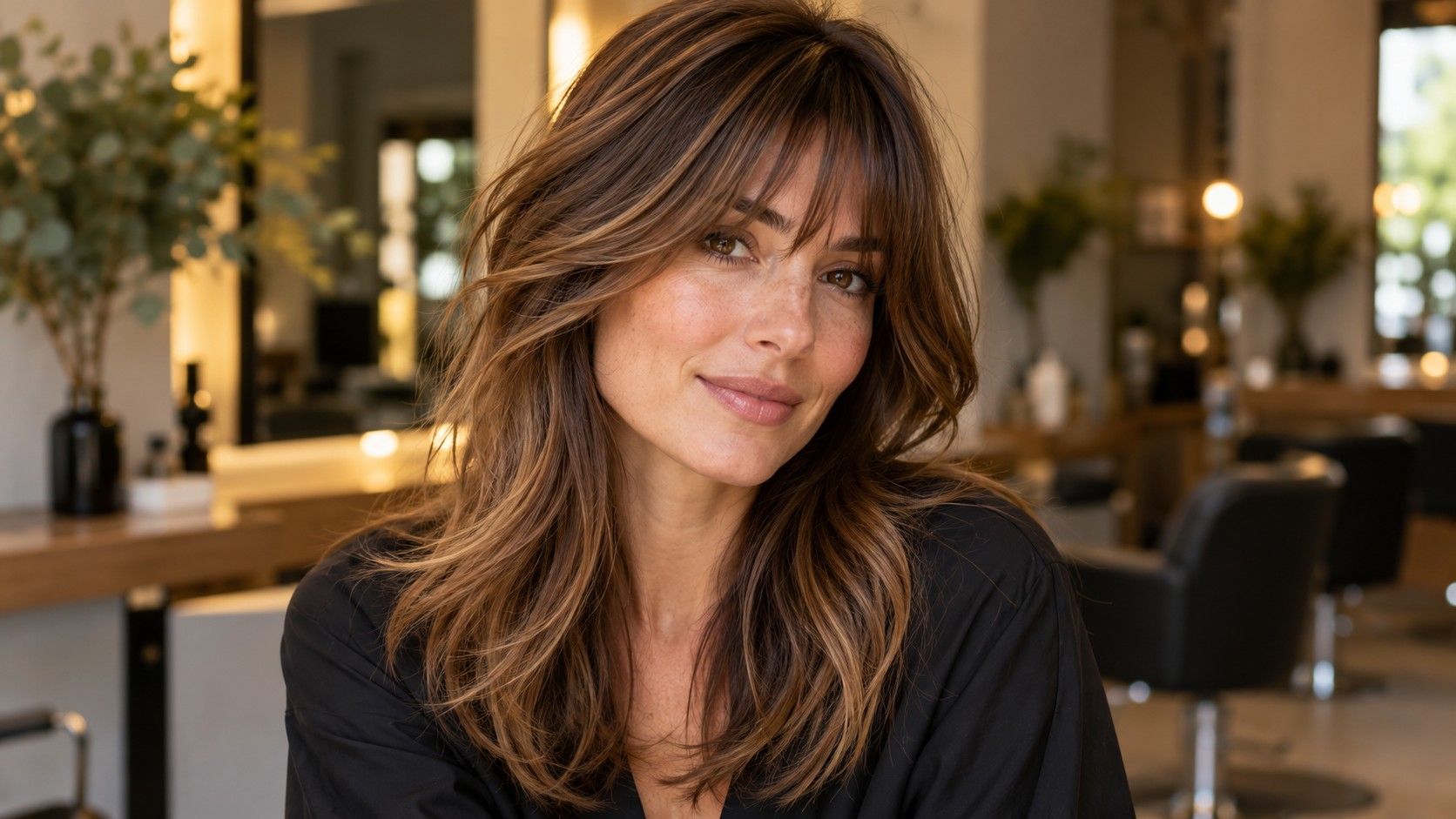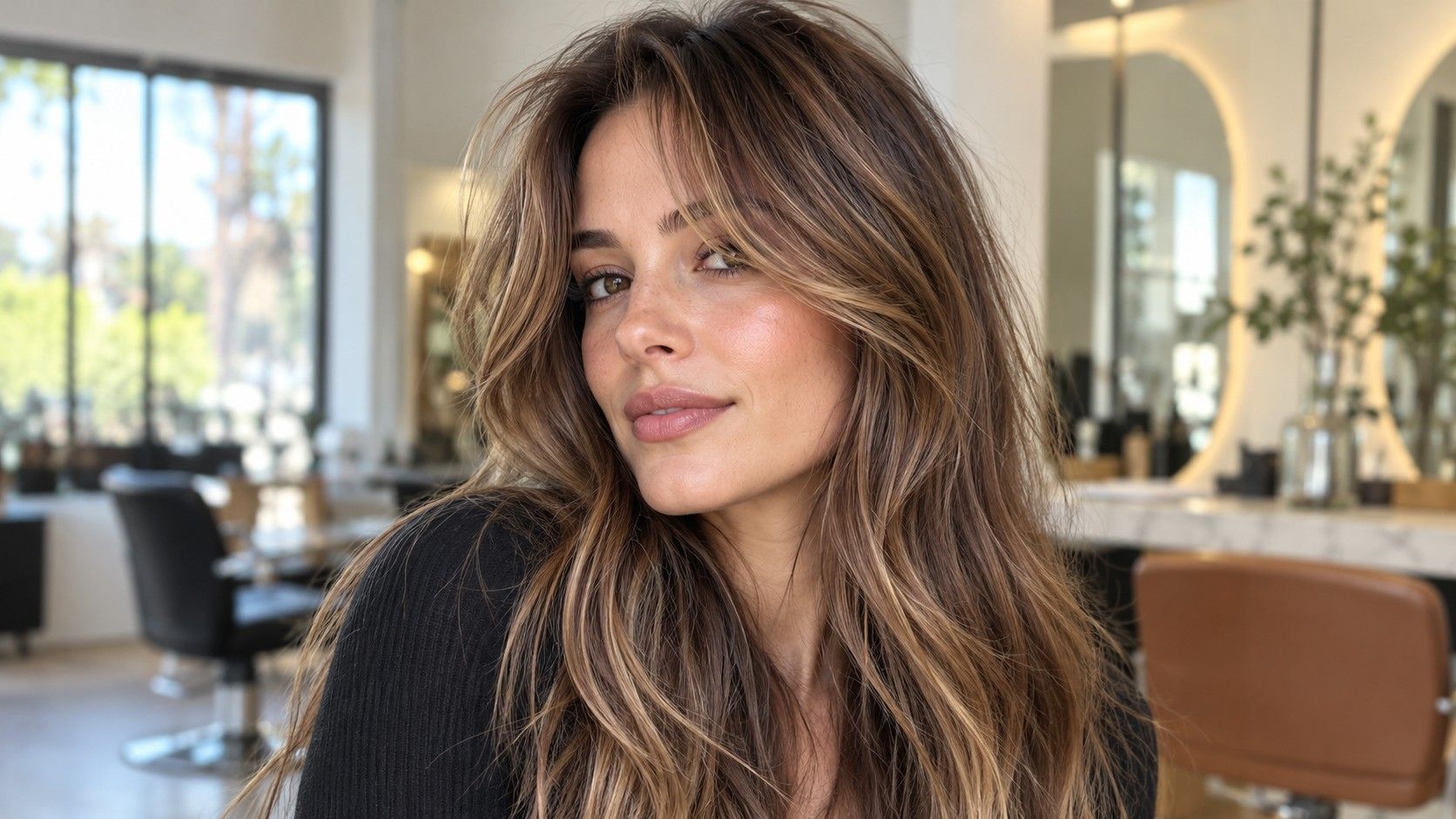
A broader forehead and a narrower chin are often used to describe a heart-shaped face, but that outline does not prescribe a haircut. Bobs, longer layers and fringe each create different movement; the best choice starts with the features and styling habits you want to work with.
How a heart-shaped outline is described
A heart-shaped face is commonly described as broader at the forehead or temples, with cheekbones that taper toward a narrower chin. The hairline may form a soft point, but it does not have to. Some people use the term for a wide upper face and a delicate jaw even when the hairline is straight. Treat the label as shorthand, not a test with a single correct answer.
Look at your outline with hair pulled away from the temples, then consider how it reads when the hair is loose. A close phone photo can exaggerate the forehead, and a hairstyle can change the impression dramatically. If a particular feature catches your attention, describe it plainly to your stylist: temple width, a narrow chin, or a fringe you want to keep out of your eyes.
Hairstyles for heart shaped faces are often discussed in terms of balance, but there is no guaranteed effect from any one cut. You may want more movement near the chin, or you may like the contrast between a broader forehead and tapered jaw. Both are valid preferences. A good haircut should support the face you have rather than impose a fixed beauty standard.
Use a reference to show the mood and outline you like. Notice where the hair ends: at the cheek, chin, collarbone or shoulder. That point can change how the upper and lower parts of the face relate. Also note whether the front is tucked behind an ear, because that small styling choice often changes the visual width around the temples.
Consider a bob or longer cut by its endpoint
A chin-length bob can bring the ends near the narrowest part of the face. Some people enjoy the neat, defined shape; others prefer the perimeter to fall below the chin. Ask the stylist to show where the cut will land when dry, especially if your hair has a wave or curl that springs upward. A few centimeters can make a bob feel quite different.
A longer bob ending near the collarbone leaves room for movement and can be easier to tie back. A blunt edge creates a clear line, while soft layers create a looser finish. If your hair is fine, retaining weight at the ends may help the shape look fuller. If it is dense, internal layers can reduce bulk without making the outline thin.
Long hair gives many options for face-framing layers. Pieces beginning around the cheekbones move toward the jaw; pieces that start lower create a more gradual frame. Neither is universally better. If you often wear your hair up, ask how the front pieces will behave when pulled back. Too-short sections may escape from a ponytail or sit awkwardly at the temples.
A short crop can work with a heart-shaped outline when its top, sides and fringe are planned together. A longer side fringe, textured top or close nape each gives a different profile. Before choosing a very short style, discuss how your hairline and cowlicks will affect the shape. Ask about trim frequency too; short cuts often need more visits to keep their silhouette.
| Option | Detail to discuss |
|---|---|
| Chin-length bob | Where will the ends land after your hair dries? |
| Long bob | How much movement and tie-back length do you want? |
| Side fringe | Does your growth pattern support a lasting sweep? |
| Face-framing layers | Can the shortest section tuck behind your ear? |
Choose fringe that fits the hairline
Heart face bangs can mean many things: side-swept fringe, a long curtain shape, a light textured fringe or a fuller straight line. A side fringe can shift the frame away from a centered hairline, while curtains leave a visible opening through the forehead. The choice is about the look you prefer and the direction your hair naturally grows, not a formula for disguising the upper face.
Check for cowlicks near the temples and at the center front. A strong growth pattern can separate bangs, so an image of smooth, perfectly placed fringe may not predict your morning. If you are unsure, start with a longer version that can be tucked behind the ear. It gives you room to learn how much upkeep fringe asks of you before making it shorter.
Parting is another low-commitment detail. A center part shows both sides of the hairline; a side part changes the distribution and can add lift at one temple. Try both with dry hair and move around rather than judging the look while holding the hair in place. If one side consistently falls back, a cut designed around that behavior will be easier to manage.
For a fringe consultation, mention glasses, work requirements and exercise habits. Bangs may touch frames or require a headband during a workout. Ask how often the stylist recommends trimming them and whether a quick home trim is sensible for the chosen shape. You do not need to make that decision at the same time as a major length change.
Adapt the outline to hair density and texture
Fine hair can lose its sense of fullness if too many layers are cut into the ends. A long bob with a stable perimeter and a few face-framing pieces may provide movement while keeping density visible. If you want fringe, ask whether there is enough hair at the front to support it without making the sides feel thin. A stylist can show how much section would be taken from the crown.
Thick hair may carry a chin-length bob or long layers beautifully, but bulk placement matters. Removing weight near the temples can change how the hair sits around a wider upper face; removing it from the wrong area can create a shelf or make the ends flare. Ask whether the plan uses internal layers or changes the perimeter, and how it will look after air-drying.
Wavy hair introduces movement that can soften or reshape the intended line. A section planned to end at the chin may spring above it once dry. Bring an everyday photo of your waves and tell the stylist whether you diffuse or let them dry naturally. If you sometimes straighten your hair, mention that as well; the cut should make sense in the styles you actually wear.
Curly hair needs a plan that respects curl groups, shrinkage and density. A blunt bob may sit higher than expected, while layers can create more volume around the crown. Neither outcome is inherently wrong. Discuss the shape with the curls in their usual state and agree on a dry-length target. For straight hair, ask whether layers will add movement or create extra styling work.
Plan an appointment around what you want to keep
Save a few references with different angles and note what you want from each: fringe, a chin-length bob, soft layers or a longer perimeter. Choose examples with hair that behaves somewhat like yours. If the photo is styled with a large round brush or curling iron, say so; the finish may not come from the haircut alone.
Be specific about how much of your current length you want to retain. “I want movement but still need a ponytail” gives the stylist a clear boundary. Ask where the shortest face-framing layer will land and whether it can be tucked away. If you are interested in bangs, decide whether to cut them now or revisit the choice after seeing the new outline.
Useful questions include: How will this cut grow out? Will the fringe split at my hairline? What does the shape look like air-dried? Which parting needs the least effort? These questions connect the reference to daily life. They also make space for the stylist to explain a different version that suits your density and routine better.
A heart-shaped face does not require a balancing haircut. You can choose a cut that brings movement near the chin, one that highlights your forehead, or a simple shape that is easy to wear. Face shape is one detail among hairline, texture, density and personal preference. A clear conversation about endpoint and maintenance is more reliable than a promise about what any style will do.