An oval outline leaves room for many haircuts, which can make choosing one surprisingly difficult. Start with the length, fringe and daily finish you want, then adapt the shape to your hairline, texture, density and maintenance routine.
Recognize the outline without over-reading a photo
An oval face is commonly described as a little longer than it is wide, with a forehead slightly wider than the jaw and a softly curved chin. Real faces rarely follow a diagram exactly. You may have a broad forehead, a strong jawline, prominent cheekbones or asymmetry that changes the impression from one angle to another. None of those details disqualifies an oval outline.
A front-facing phone photo is a poor diagnostic tool on its own. A close lens can distort proportions, and a smile changes the cheek area. If face shape is useful to you, look in a mirror with hair pulled back and compare a few relaxed views. Then use ordinary terms: long forehead, narrow jaw, high cheekbones, hairline cowlick. They help a stylist understand the frame without pretending a category explains your whole appearance.
Oval shapes are often said to suit nearly anything. That claim can make choosing harder, because it skips the real questions: How much length do you want to lose? Does your hair hold a bend? Will fringe fit your morning routine? A cut still has to work with density, growth direction and personal style. The category offers flexibility, not an obligation to try every trend.
Bring a reference because you like its length, movement or finish, rather than because a caption calls it perfect for oval faces. Tell the stylist what should stay recognizable about your current hair. If the jawline is a feature you like, say so; if you prefer the forehead partly covered, mention that. Such preferences lead to a more useful conversation than an online face-shape verdict.
Pick short, medium or long according to your week
A short crop or pixie can reveal the cheekbones and jawline, but it needs a silhouette that suits your hairline and crown. Ask where the shortest pieces will sit and how the cut grows out. A strong cowlick or dense crown may change the outline, while fine hair may need enough length to keep the top from collapsing. The best haircut for an oval face is still a haircut that behaves on your head.
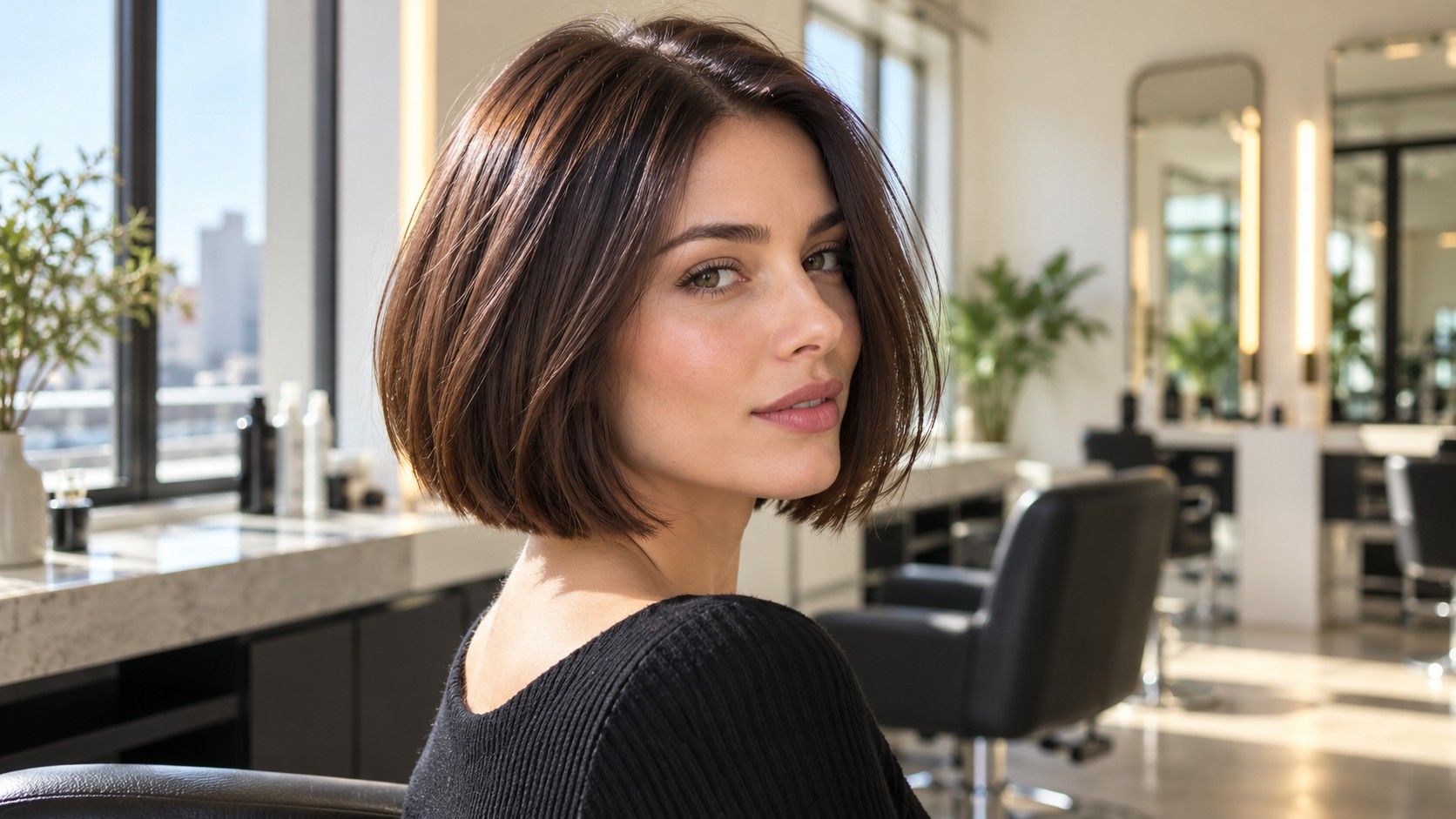
A bob offers many options: a jaw-skimming shape, a longer lob, a blunt edge or soft layers. Try to identify the quality you want. A crisp perimeter looks different from ends that turn under, and a longer front changes the side view. If you wear your hair tucked behind your ears, ask how the front will fall when released; a photo of the bob alone will not show that daily movement.
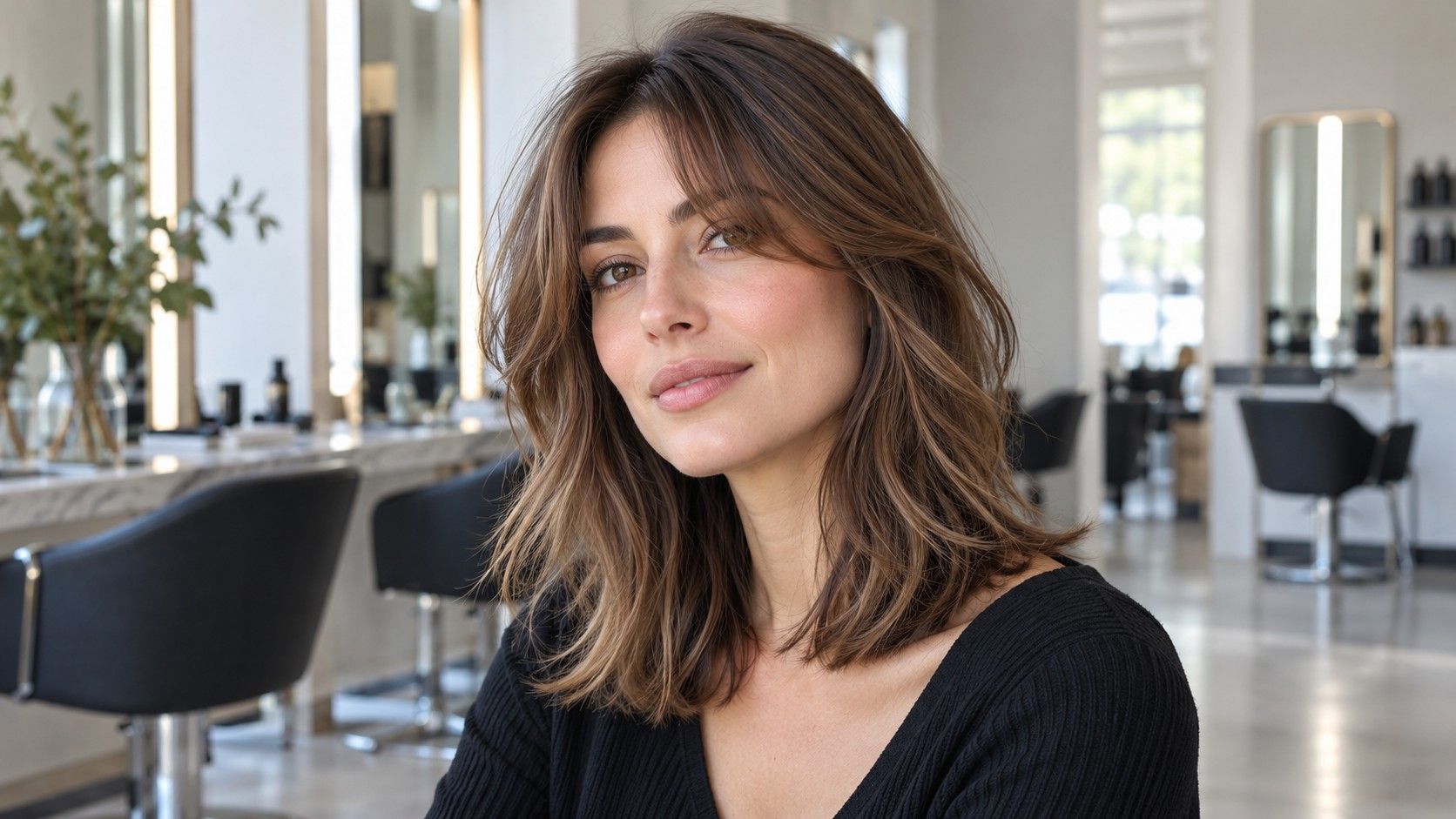
Medium lengths are practical if you want to tie your hair back without carrying very long ends. Layers can add swing, but they should be planned around the way your hair parts and the amount of density at the perimeter. With fine hair, a long, blended layer often preserves fullness better than short, disconnected pieces. With thick hair, carefully placed internal movement can reduce the heavy block feeling.
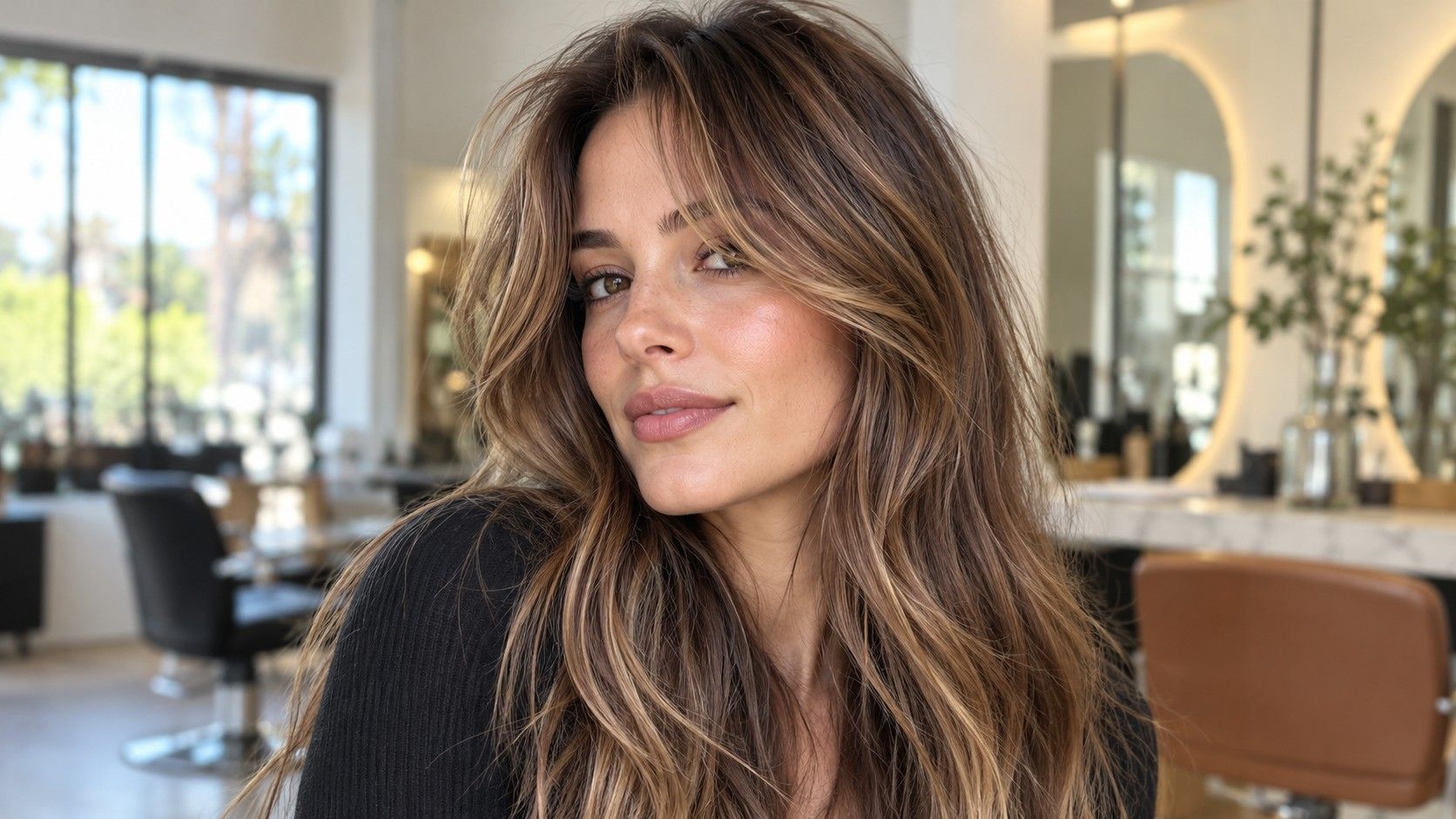
Long hair gives room for waves, face-framing layers and different parts, though it may need shaping to avoid a flat curtain. Decide how much styling time you will actually spend. If you like a quick air-dry, ask for a shape that works without a round brush. If you regularly curl or smooth your hair, discuss how the ends and front pieces will look under that routine. Maintenance belongs in the cut decision from the start.
| Starting point | What to compare |
|---|---|
| Pixie or crop | Hairline, crown growth and trim frequency. |
| Bob or long bob | Perimeter, front angle and how it behaves tucked back. |
| Long layers | Movement versus fullness at the ends. |
| Fringe | Cowlicks, upkeep and whether you want hair across the forehead. |
Choose fringe by hairline and daily maintenance
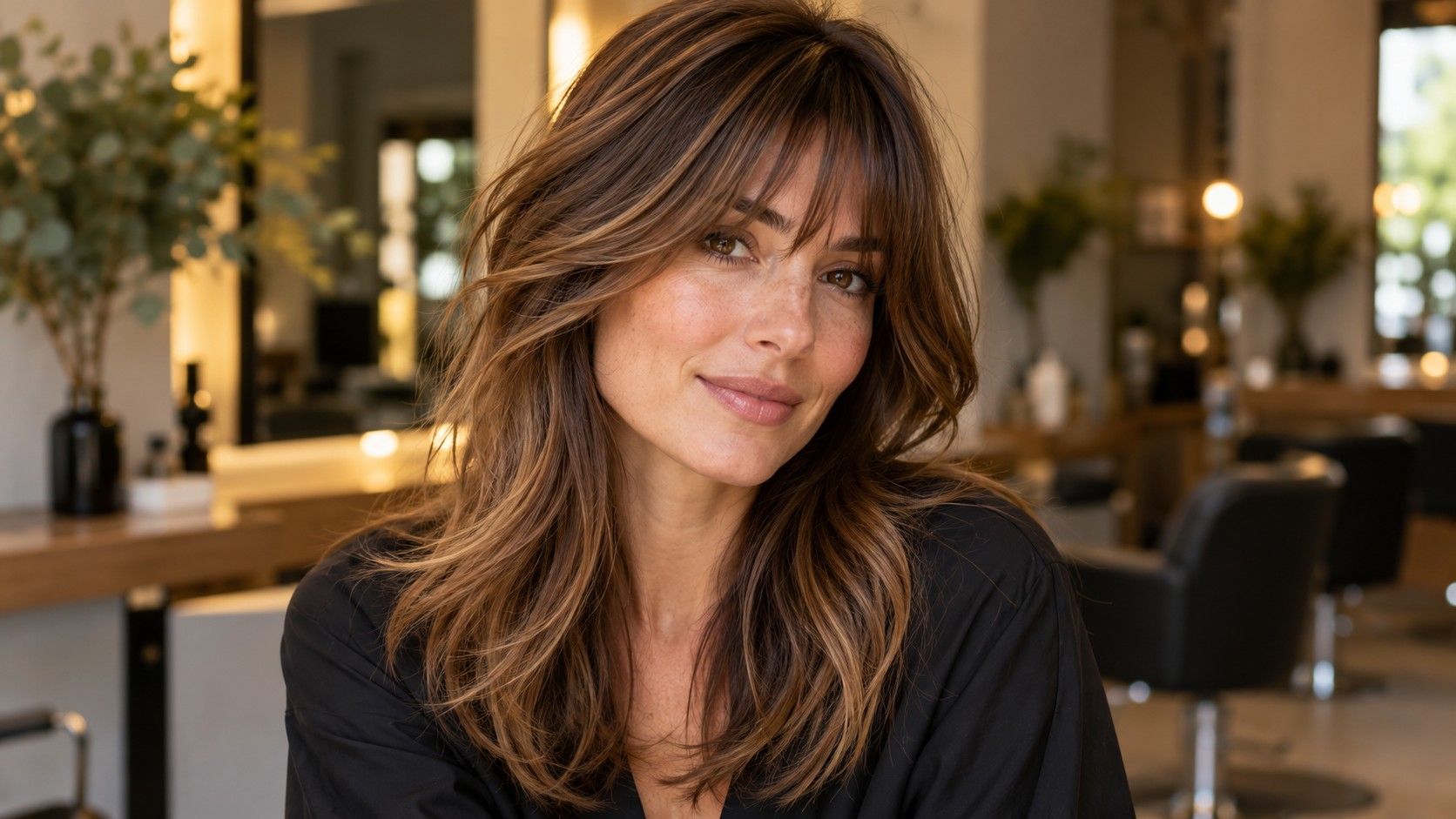
Oval face bangs can be full, wispy, side-swept or parted as curtains; the question is which version fits your hairline and tolerance for styling. A dense blunt fringe makes a clear statement and usually needs trims to keep its length. A longer curtain fringe can blend into layers, but it may still need a quick blow-dry around the temples to sit open rather than separate.
Check for cowlicks at the front and note whether your hair naturally falls forward or away from the face. A fringe cut against a strong growth pattern can split by lunchtime. If you have never worn bangs, ask for a longer, testable version that can be tucked back. You can shorten it later; growing out a very short fringe takes patience.
Face-framing pieces without a full fringe are a quieter option. A layer near the cheekbone can highlight that area, while a piece reaching the jaw draws attention lower. Ask the stylist to hold the proposed length against your face before cutting. If you wear glasses or prefer a high ponytail, test how the sections sit with those habits in place.
Parting changes the whole frame without a haircut. A center part can look clean and symmetrical, while a side part adds an off-center line and lift at the roots. Take a few photos after trying both with your hair dry. The result is more useful than assuming one part suits an oval outline. Your natural part may be the easiest to maintain, but preference gets a vote.
Match layers to texture and density
Straight hair tends to display its perimeter and layers clearly. If you want a smooth shape, ask whether the stylist plans to keep the ends blunt or soften them with point cutting. With fine density, removing too much from the bottom can make a haircut look thinner than the reference. A few long layers can provide movement while leaving enough weight for a neat finish.
Wavy hair changes as it dries, so discuss where layers will land in their natural state. A long face-framing section may spring up and sit closer to the cheek than expected. Ask whether the cut is meant for air-drying, diffusing or heat styling. Bring a photo of your own hair on an ordinary day, not just a carefully finished picture, so the stylist can plan for the texture you live with.
Curly hair often benefits from shaping that respects curl groups and shrinkage. A wet cut can look longer than it will once dry, while short layers may create more crown height. Neither is automatically wrong; the result depends on what you want. Discuss the shape with curls dry or ask the stylist to explain how much length to expect after the curls contract.
Thick hair can carry more layered movement, but the placement matters. Removing bulk around the wrong area can make ends flip or create a shelf. If your hair is dense at the sides and lighter at the front, mention it before choosing a bob or fringe. A good plan accounts for how the haircut is distributed, not just the overall amount of hair.
Bring a reference that starts a useful conversation
Save two or three images of the cut from different angles. Choose examples with comparable texture and density when possible, then say exactly what you want to borrow: the length, fringe, fullness at the ends or softness near the cheekbones. If your favorite feature comes from styling rather than the cut, identify that too. Clear references keep the appointment grounded in details you can actually choose.
Tell the stylist how much change you are ready for. “I want to keep the length and add movement” is a different request from “I am ready for a jaw-length bob.” Ask for a preview of the shortest layer, and agree on whether fringe is included before the scissors start. If you are unsure, stage the change: reshape the length first, then decide about bangs at a later visit.
Ask what upkeep the finished look requires: trim interval, drying technique, heat tools and likely grow-out. If your routine is low effort, say that plainly. An elegant reference can depend on a daily blowout, while a similar shape may be adapted to air-drying. The stylist should be able to describe the version that fits your actual week.
Face proportions can guide a haircut, but they cannot tell you what you will enjoy wearing. Oval outlines allow plenty of choice, and the meaningful differences are often texture, density, hairline and maintenance. Choose a cut for its movement and practical feel. Bring the reference, explain your priorities, and leave room for the stylist to adapt the idea to your hair.