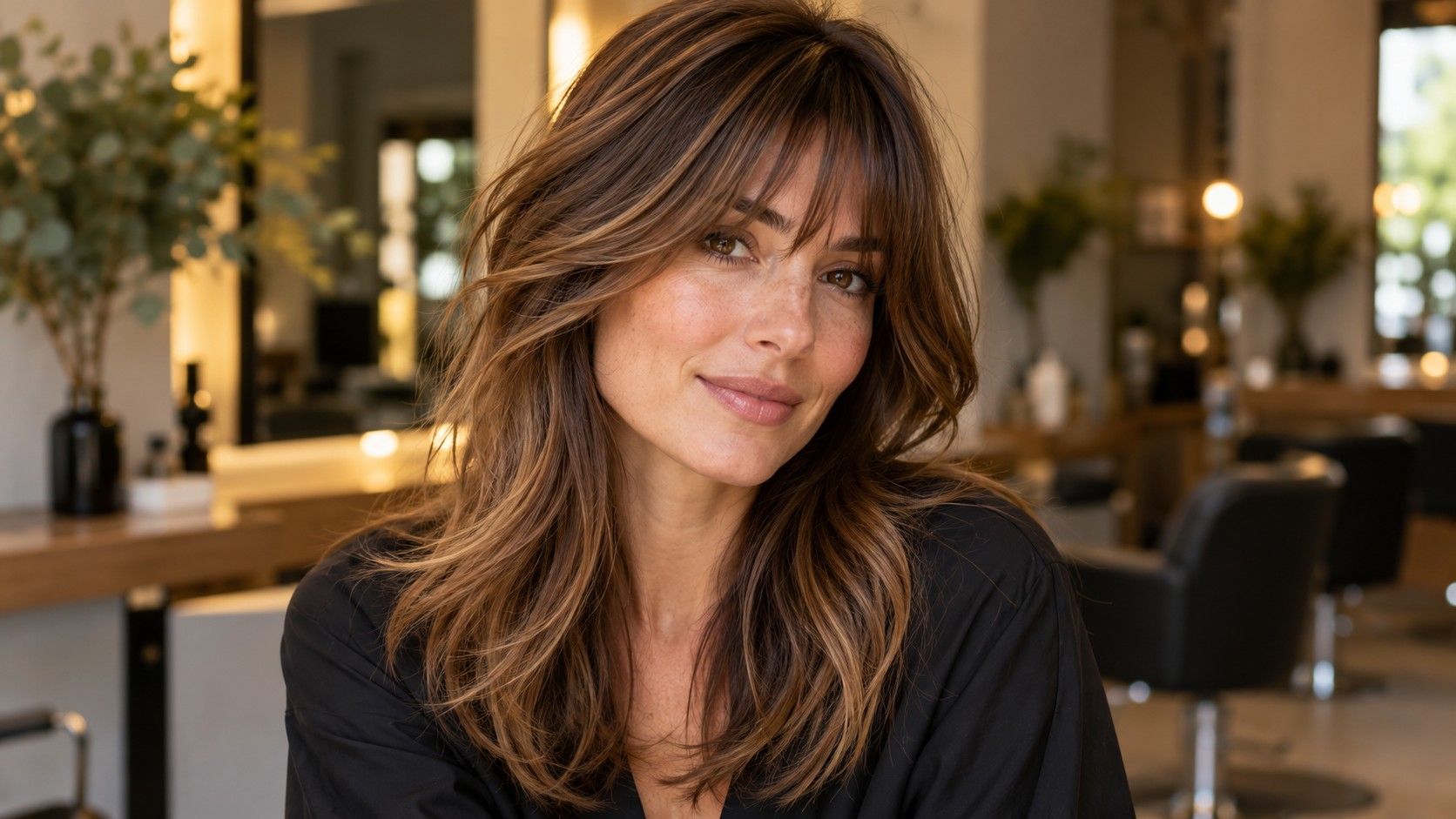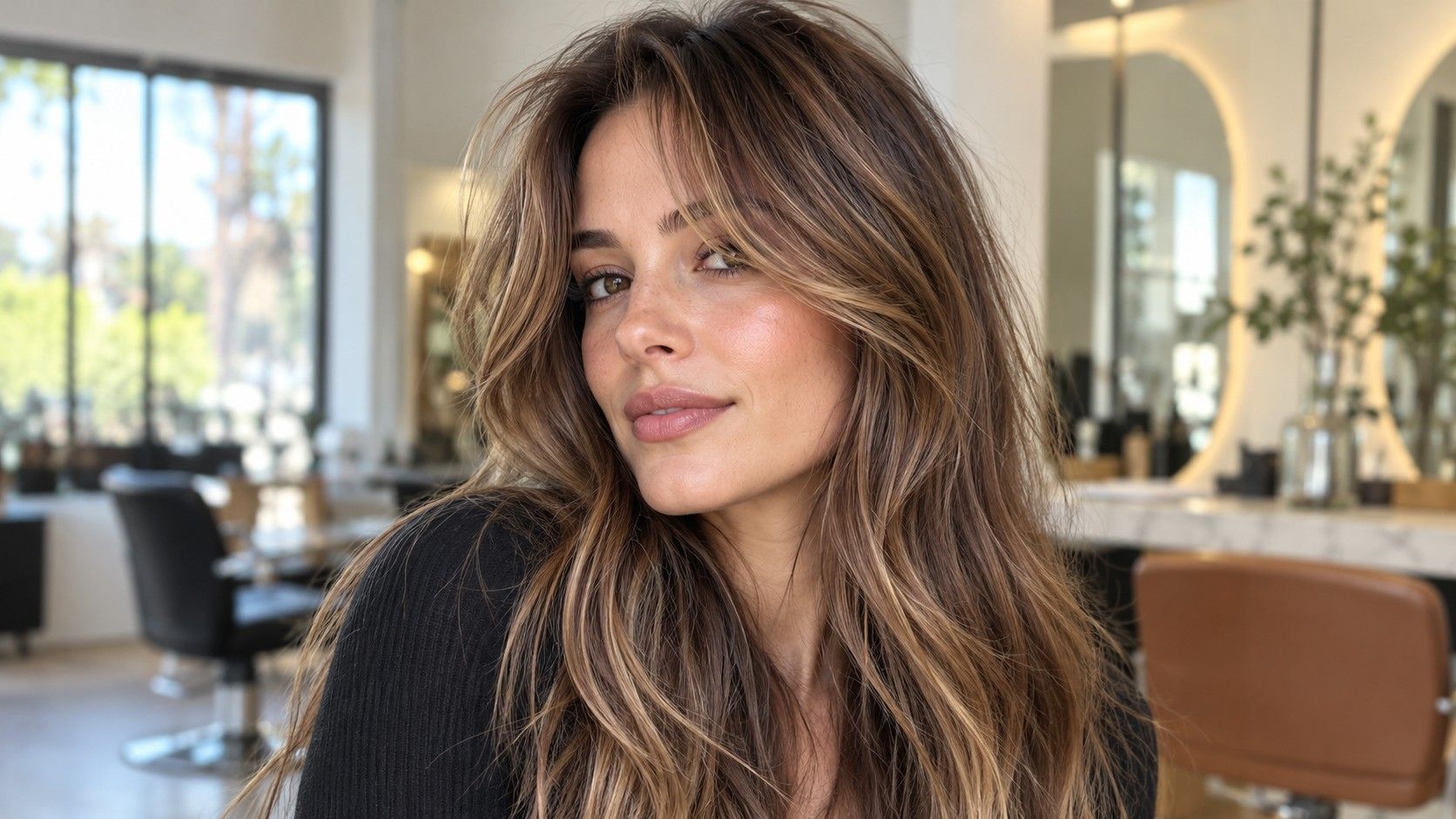
A round face can wear a wide range of cuts; the useful choice is where you want the hair to move and how much styling you want to do. Length, face-framing layers, bangs and parting all shape that frame, but none is a rule for changing your features.
What makes a face read as round
A round outline is usually described by similar width and length, with a gently curved jaw and fuller-looking cheeks. It is a broad impression, not a measurement you need to pass. Many faces combine a rounded cheek area with a longer forehead, a defined chin, or angles that become clearer when the hair is pulled back. Those details matter more to a haircut than the label alone.
If you are trying to identify your shape, look at several ordinary views rather than one close selfie. A wide-angle phone lens can enlarge the center of the face, while a high camera angle changes the jaw and forehead. Check a mirror with hair tucked behind the ears, then notice where the hairline, cheekbones and jaw actually sit. The aim is to describe what you like to frame, not to assign yourself a permanent category.
For a salon conversation, practical language is more useful than “make my face look thinner.” You might say that you like movement around the cheekbones, prefer a visible jawline, or want the sides to fall away from the face. Those preferences tell a stylist where to place layers and how much hair to leave around the temples. They also avoid treating a normal feature as a problem to correct.
Roundness does not dictate a short list of approved cuts. A blunt bob, long layers, a pixie or a tied-back style can all work when their shape suits the person wearing them. What changes the result is the relationship between outline, hair density and styling habits. A photo of a cut can start the discussion, but it cannot account for your growth pattern or natural texture.
Choose length by the way it moves
Length changes where the eye meets the hair, but there is no required point below the chin. A chin-length bob can show the jaw and feel crisp; a collarbone cut leaves more room for bend and face-framing layers. Long hair can carry a strong vertical line, especially when it has enough movement near the front to keep the sides from looking like a single curtain.
If you are drawn to a bob, ask how its perimeter will sit when dry. A very rounded, jaw-level shape may echo the curve of the cheeks, which some people enjoy and others find too soft. A slightly longer front, a clean edge, or internal movement can change the effect without making the haircut complicated. Bring a side view as well as a front view when the angle matters to you.
For medium and long cuts, discuss the first layer before agreeing to “lots of layers.” Face-framing pieces that begin near the cheekbone can create a diagonal line; pieces that start at the mouth or collarbone give a different, looser frame. The right starting point depends on how your hair falls and whether you tuck it behind your ears. A layer that looks airy in a styled photo may flip outward on a straight, dense texture.
Consider how often you want to reshape the cut. A precise bob can lose its line as it grows, while long blended layers may tolerate a longer gap between appointments. If your hair is thick, removing bulk can make a longer shape easier to wear; if it is fine, too much layering can make the ends feel sparse. Ask for the maintenance version of the haircut, not just its salon finish.
| Hair choice | What to consider |
|---|---|
| Chin-length bob | A clear edge near the jaw; check how the ends sit dry. |
| Collarbone cut | Room for movement and a more forgiving grow-out. |
| Curtain or side fringe | Test hairline direction and the daily styling needed. |
| Long face-framing layers | Choose the starting point and confirm the fall with your texture. |
Bangs and partings are small changes with visible effects
Side-swept bangs and curtain fringe are popular with round face shapes because they introduce an angle and leave some forehead visible. That does not make them a rule. A full fringe can look deliberate and graphic, while a soft, broken fringe feels lighter. Decide first whether you want hair across your forehead every day, since fringe asks for regular trimming and often a quick morning reset.
Parting is an easy way to test a change before cutting. A deep side part shifts the hairline and creates asymmetry; a centered part gives a calmer, more balanced frame. Try both with dry hair, then take a photo at eye level in daylight. Notice whether the roots stay put and where the front sections land after you move around. A part that looks convincing only while held in place may not suit your routine.
Cheekbone-length pieces deserve a careful consultation because they can either skim the face or sit right at its widest point. Ask the stylist to show the intended fall before taking a large amount off. If you wear glasses, headphones or a ponytail, test those too: short pieces may brush the frames or escape from a tie. Small details often decide whether a face-framing cut feels easy on an ordinary Tuesday.
Before committing to bangs, account for cowlicks, curl pattern and forehead height. A strong growth direction can split a fringe; a natural wave may make it spring shorter than expected. The stylist can cut dry or leave extra length for a first adjustment. Save references that show similar texture and density, not only a face shape that resembles yours.
Adapt the cut to your texture
Straight hair shows the outline of a haircut clearly, so a blunt edge or long diagonal layers can read as intentional shape. If the strands are fine, retain weight at the ends and ask where removing bulk will actually help. Crown volume can be added through the cut or styling, but piling short layers on top can create daily work. A few well-placed pieces usually give more control than layering everywhere.
Wavy hair has its own idea of length. A face-framing section that reaches the cheek when wet may bounce above it once dry, so describe the finished position you want. A stylist who understands your wave can build movement without thinning the ends until they frizz. Ask whether the shape is designed for air-drying, diffusing or a round-brush finish; those are different cuts in practice.
Curly hair should be discussed in its usual worn state. Shrinkage, curl grouping and density can make a one-length reference misleading, and short layers may add lift that you did not request. Bring clean, dry hair if the stylist wants to see its natural behavior. If you often straighten it, explain that too, because the cut needs to make sense in both states rather than only in the salon chair.
Thick hair can support dramatic layers, but weight removal needs a plan. Ask whether the stylist will shape the perimeter, remove internal bulk or shorten the front; each affects how the hair sits differently. For a round face, a little lift at the crown or movement below the cheek can be enough. The aim is a cut that moves well with your texture, not a prescribed silhouette.
Make the consultation specific
Bring two or three images that show the cut from the front, side and back, ideally on hair with a similar texture. Tell the stylist what you like in each picture: the length, fringe, soft angles or how the ends sit. A collection of unrelated screenshots can be useful if you can name those details. It gives the stylist room to create a version that fits your density and features.
Explain your ordinary routine honestly. Say whether you air-dry, diffuse, use heat tools, tie your hair back for work or want to spend five minutes on styling. Ask how the proposed cut behaves after sleeping on it and what products, if any, are genuinely needed. If the answer depends on a salon blowout every morning, that is important information before the first snip.
Useful questions include: Where will the shortest face-framing layer land? Will this shape still work if I part it on the other side? How will my natural texture affect the fringe? What will the cut look like after six weeks? These turn a vague face-shape goal into choices you can picture. You can also ask the stylist to pause before cutting fringe or removing significant length.
The best haircut for a round face is the one whose lines, movement and upkeep feel right to you. Use face shape as one piece of the design conversation alongside density, texture, lifestyle and personal taste. You do not need to disguise your cheeks or chase a promised visual effect. A clear description of what you want to see in the mirror is a better starting point.