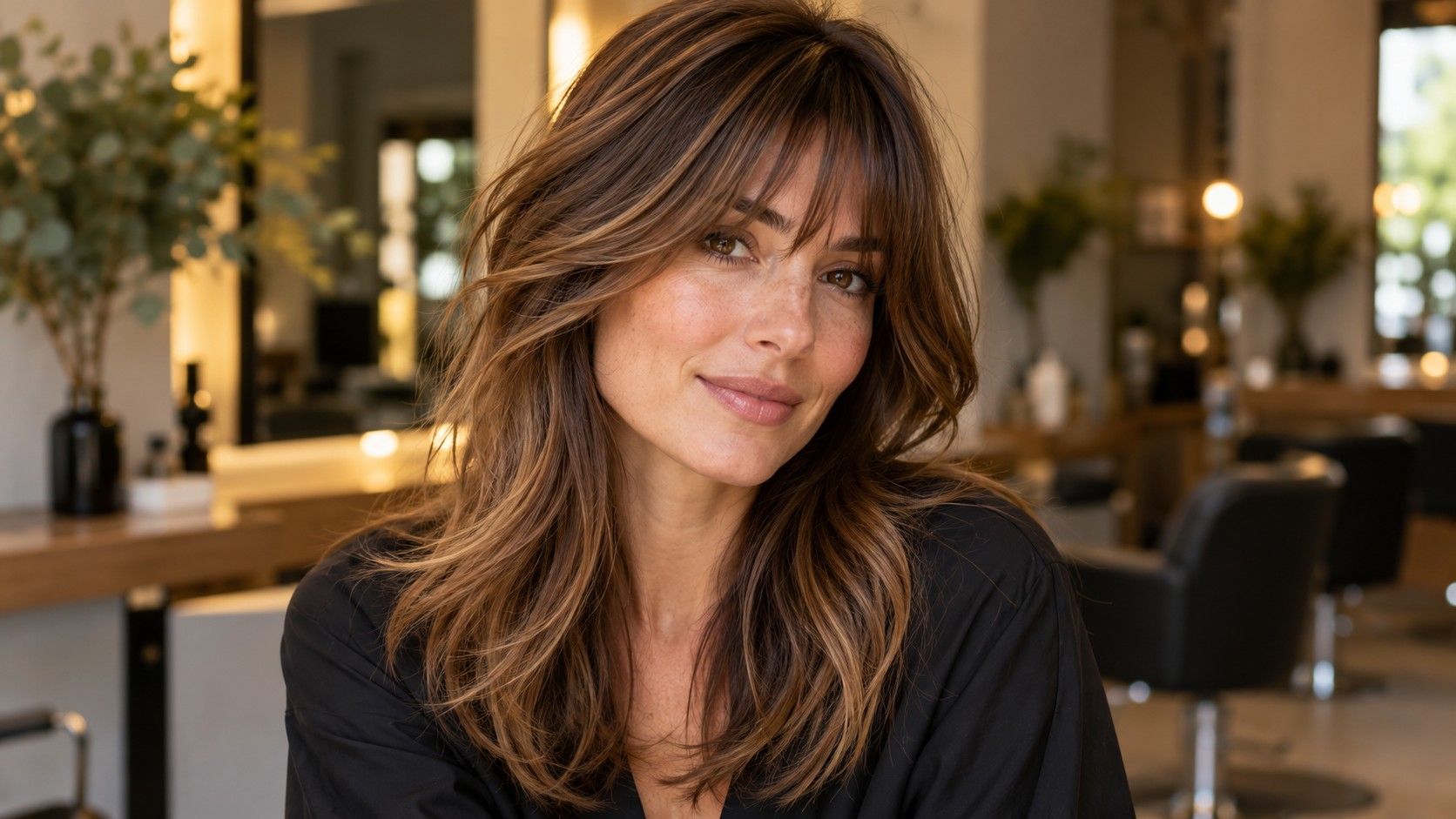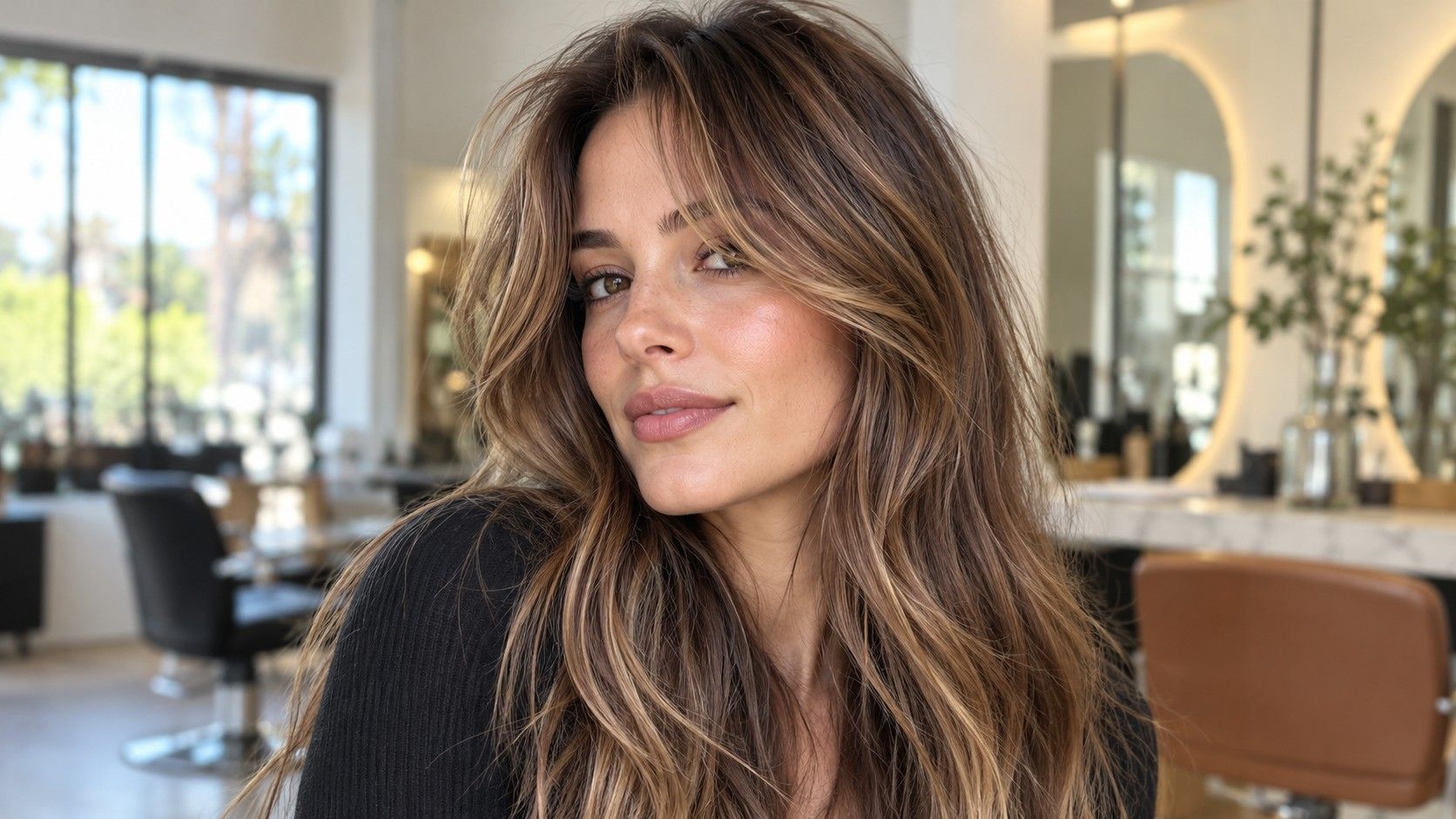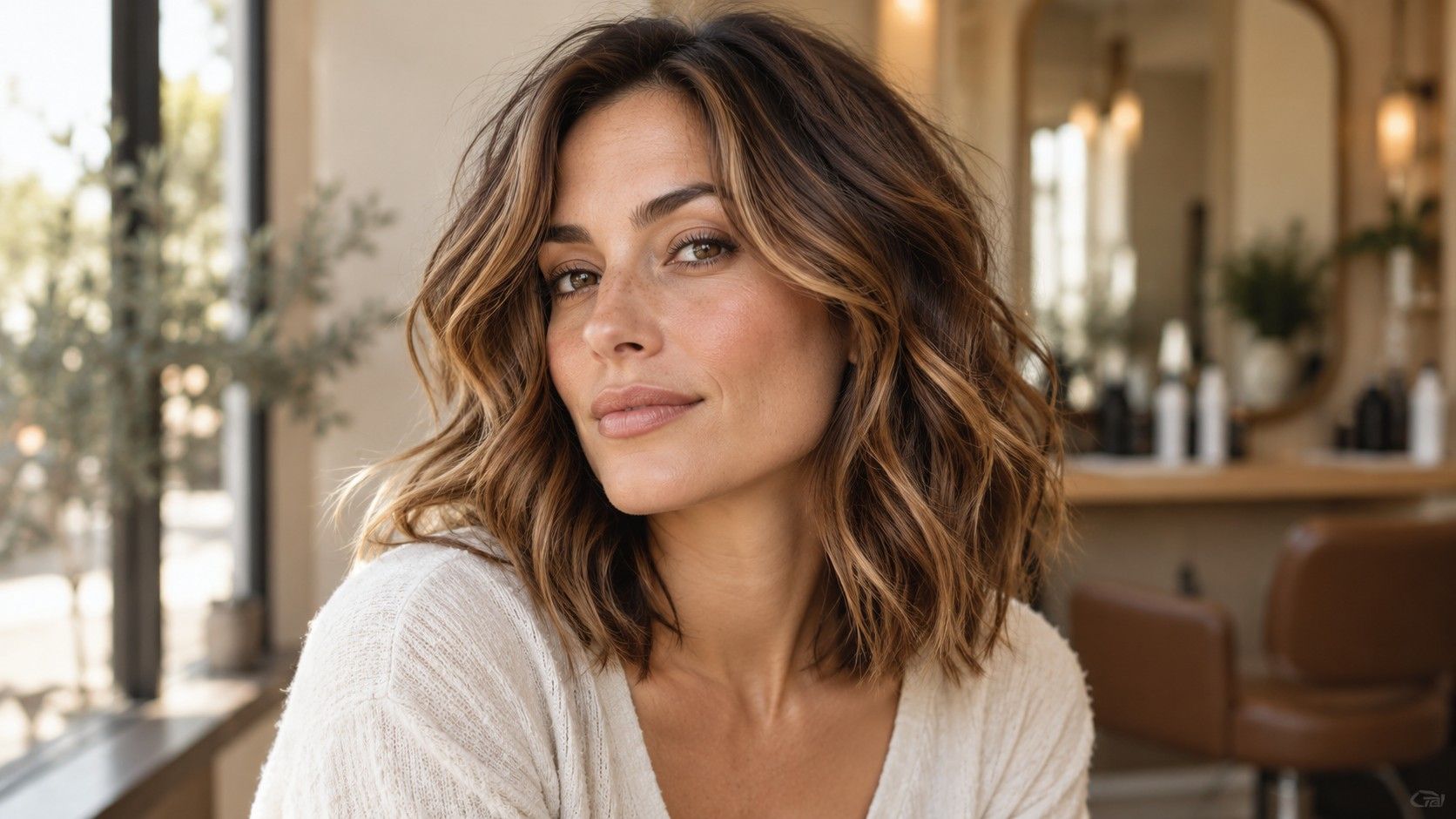
A defined jawline can be part of a haircut’s character, whether you prefer to emphasize it or add softer movement nearby. The right length, layers and fringe depend on your texture and taste, not on a rule that says a square outline must be disguised.
Understand the outline on your own terms
A square face is often described by a forehead, cheek area and jaw that have similar widths, with a more defined jawline. The description is broad: some people have a square outline with rounded cheeks, others have a narrow chin or a softer hairline. You do not need to measure your face precisely to decide what kind of haircut appeals to you.
If you are assessing shape, pull your hair back and look at more than a single photo. A close selfie distorts proportions, while a smile changes the jaw and cheeks. Notice whether you like the strong lines or want some movement around them. Hair can frame, emphasize or soften an outline, and none of these choices is a correction of a flaw.
Useful words for a stylist include “keep the jaw visible,” “add movement around the cheekbones,” or “I want a cleaner, more graphic line.” They describe a result you can picture. Avoid relying on a rigid face-shape rule: the same blunt bob may feel polished on one person and too geometric on another because density and texture change the edge.
Hairstyles for square faces span short crops, long hair, waves and fringe. The design decision is where the perimeter ends and how the front sections move. Bring a reference that shows those details. A front view alone can hide an angled hemline or long front pieces, so include a side angle when the shape depends on it.
Choose length for the outline you want to see
A jaw-length bob puts the perimeter close to the jawline, which can create a crisp, intentional frame. If that is the look you want, ask about a blunt finish and how it will sit when air-dried. If you prefer a less defined edge, a longer bob that reaches the collarbone gives the ends room to move below the jaw. Small length changes can shift the feeling of the whole cut.
A long bob is a versatile middle ground, but the front-to-back shape deserves attention. A steep angle may look sharp; a subtle angle appears more relaxed. Ask the stylist to show the profile before cutting, especially if you wear your hair tucked behind the ears. The front can then be adjusted to avoid an unexpected wedge or a line that catches at the shoulders.
Long layers offer movement while preserving length. Face-framing pieces that begin around the cheekbones create a diagonal line; pieces starting near the chin or collarbone feel softer and less immediate. Ask where the shortest layer lands with your hair in its natural state. If you have a strong wave, it may rise above the point shown in a straight reference.
A pixie or shorter crop can make the jaw and cheekbones part of the overall design. The balance comes from the cut itself: a textured top, close sides or a longer fringe each changes the silhouette. Consider how frequently you are willing to trim it. Short hair can be low in washing time but high in shape maintenance, particularly around the nape and ears.
| Cut detail | Practical question |
|---|---|
| Jaw-length bob | Do you want a crisp line at the jaw or a softer edge? |
| Long bob | Where should the front end relative to the collarbone? |
| Cheekbone layers | Will the section skim the cheek or spring above it? |
| Curtain fringe | Can your hairline hold the part without daily resetting? |
Use fringe and layers to adjust the front view
Curtain fringe and side-swept bangs introduce a diagonal, while a straight full fringe makes a clear horizontal line. Bangs for a square face are not automatically soft or severe; their density, length and texture determine the effect. A wispy fringe can leave the forehead partly visible, while a heavier version frames it more strongly. Talk about the finish you want rather than choosing by face label.
Face-framing layers need a precise starting point. A cheekbone layer can add motion near the widest part of the face; a longer layer that begins near the mouth falls differently and may be easier to tuck away. Ask the stylist to hold a section at the intended length before cutting. This is especially helpful if you wear glasses or keep hair behind one ear.
Parting is a reversible way to test the amount of asymmetry you like. A center part gives a balanced frame, while a side part can shift the emphasis and create lift at one temple. Try each with dry hair and take a quick photo at eye level. If your roots repeatedly return to one side, a cut designed around that natural part may need less styling effort.
Not every layer needs to curve around the face. For a more graphic look, keep the front clean and build texture through the ends or crown. That can be especially effective on straight hair, where the edge remains visible. Explain whether you want softness or definition; the stylist can then choose between point-cut ends, a blunt line, or internal movement.
Work with your natural texture
Straight, dense hair tends to show every line. A heavy one-length cut can look strong and polished, though it may feel broad at the sides; subtle internal layers can remove weight without making the perimeter wispy. Fine straight hair usually benefits from keeping fullness at the bottom. Ask how the cut will look without a salon blow-dry, since heat can make a shape appear sleeker than it is day to day.
Wavy texture naturally breaks up a sharp perimeter. A collarbone cut with long layers can let the wave form around the cheek and jaw, but the finished length may sit higher after drying. Tell the stylist whether you air-dry, diffuse or smooth your hair. The same set of layers behaves differently depending on how the wave is encouraged.
Curly hair should be shaped with shrinkage and curl grouping in mind. Short layers may add lift at the crown; longer sections may keep the silhouette more elongated. Both can be attractive choices. Bring hair in the state the stylist requests and explain how you normally wear it. A dry or curl-aware consultation helps estimate where each layer will actually land.
Thick hair can carry movement, but thinning the ends too aggressively may make them expand or separate. Ask whether bulk should be removed internally, around the perimeter, or both. Fine hair has the opposite concern: too many short layers can reduce the sense of density. Texture is not an afterthought; it is part of the geometry of a haircut.
Ask practical questions before the first cut
Bring reference images that show front, profile and back. Point to what attracts you in each: the long bob, the fringe, the clean jawline or the loose texture. One photo may show a beautiful finish that comes from styling, while another reveals the actual cut. A stylist can adapt the idea more accurately when you explain which parts matter most.
Describe your week: how often you wash, whether you tie your hair up, how much heat you use and when you can return for a trim. Ask how the shape grows out and whether it needs a brush-and-dryer routine. A precise crop may be quick to wash but require regular appointments; long layers may be more forgiving but still need occasional shaping.
Before proceeding, ask where the shortest layer will end, what the cut looks like with your usual part, and how much length is being removed. If you are considering bangs and a major change at once, you can stage them. A longer fringe can be shortened later, and the stylist can first establish the perimeter so you can see how it feels.
The most successful haircut is not the one that hides a square outline. It is the one whose edges and movement match your taste and routine. Face shape can help you discuss proportions, but it should not restrict the options. Use specific preferences, realistic references and an honest account of styling effort to reach a cut you will be glad to wear.