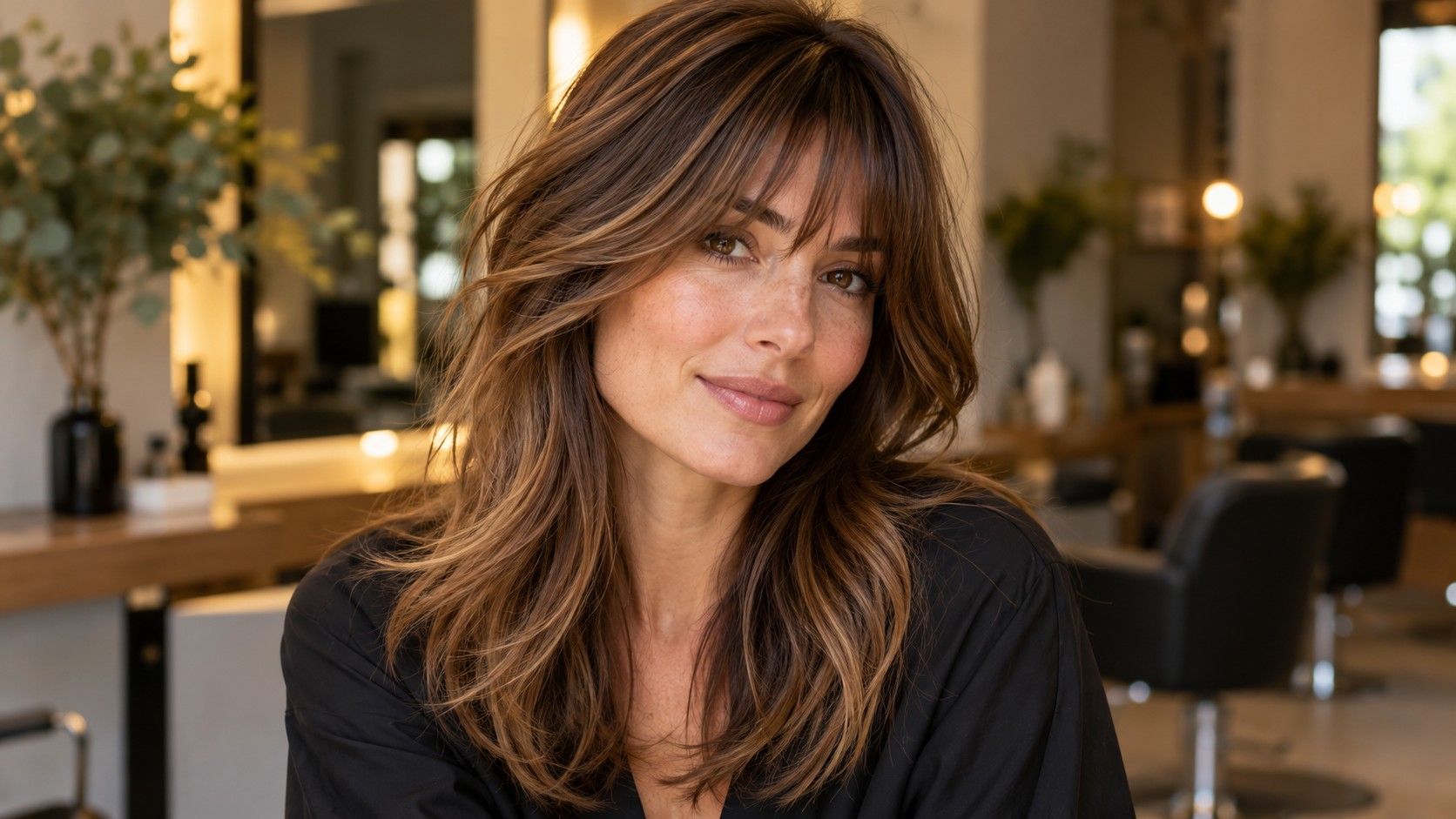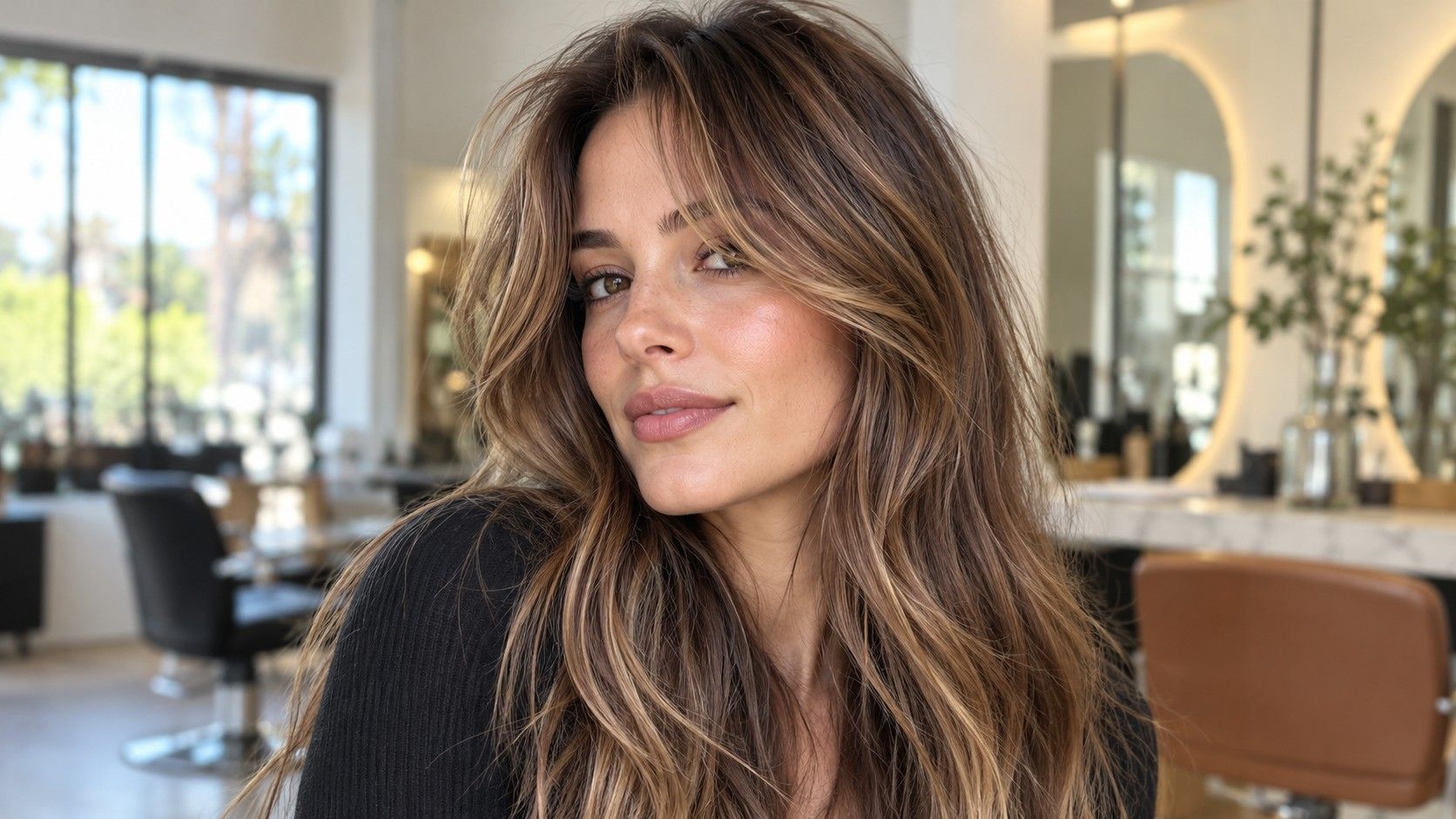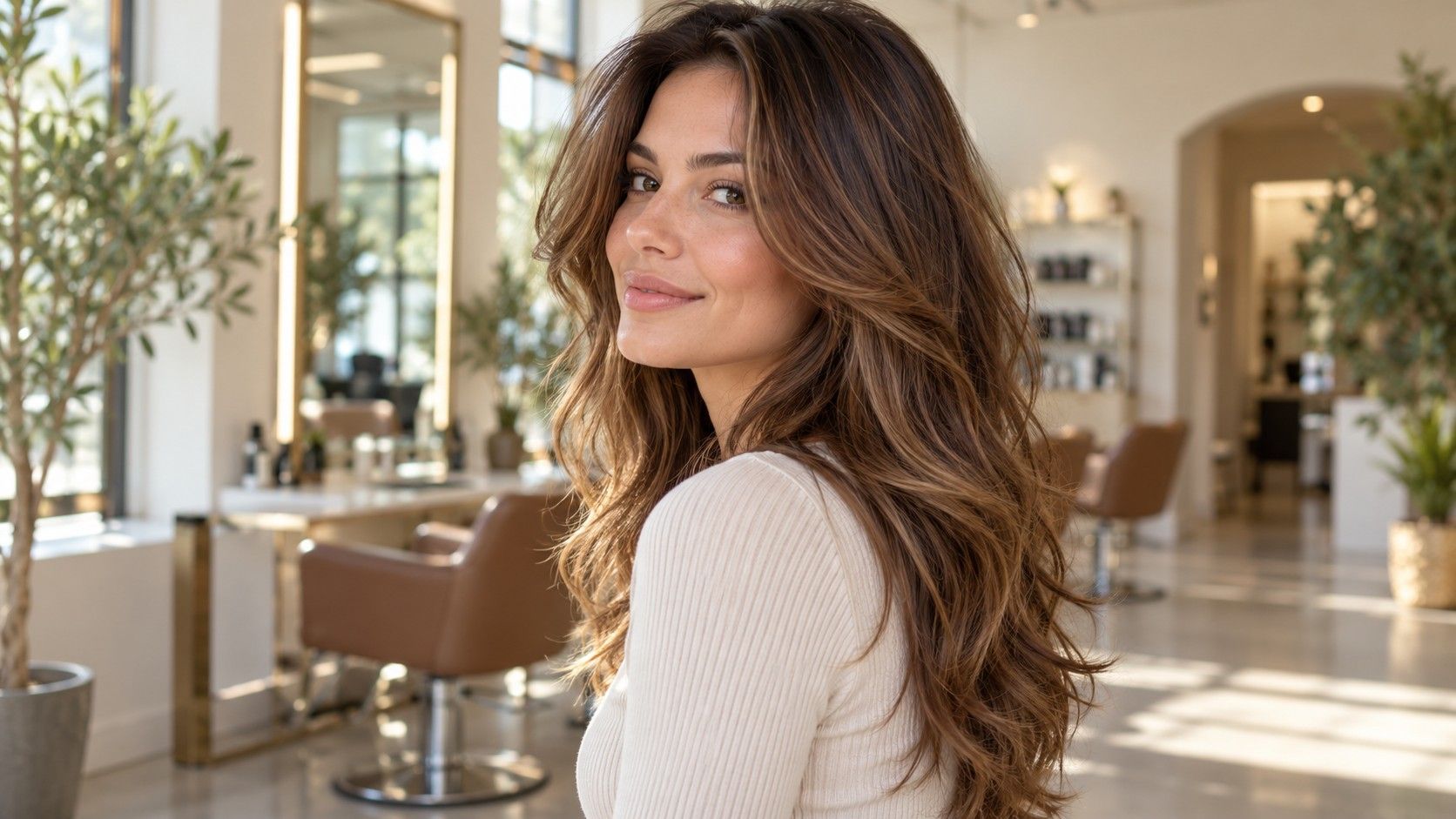
Layers can release weight, create movement or frame the face, but the word covers many different cuts. The result depends on where the shortest sections begin and how the ends are preserved. This guide explains the main types and the questions that help a stylist tailor them to your texture and routine.
What do layers actually change?
Layers create different lengths within a haircut. They can release weight, add movement, shape the outline or help shorter sections sit around the face. The effect depends on where the shortest pieces begin, how much hair is sectioned and how the perimeter is preserved. “Add layers” is therefore less specific than it sounds; it can describe several very different results.
Long layers keep most of the length while shortening selected sections underneath or around the top. They can reduce a heavy feel and encourage movement, especially when hair is waved or curled. Short layers begin higher and create more separation, but may need styling to settle into the intended shape. Ask where the shortest layer will land before the stylist starts.
Face-framing layers focus on the front sections, often starting near the cheekbone, jaw or chin. They change how hair falls when it is worn forward and can make a ponytail less uniform. Internal layers sit within the haircut and may reduce bulk without dramatically changing the outside line. The names describe location, but the stylist should show you the proposed outline.
Layers do not create more hair or guarantee fullness. On some fine hair, too many short sections can leave the ends looking thin. In dense hair, internal shaping may make the cut easier to move without sacrificing the entire perimeter. Explain whether you want less weight, more visible movement, a softer frame or a different silhouette.
How do long, short and face-framing layers compare?
Long layers are a common choice for people who want movement while keeping a strong overall length. They can work with a blowout, waves or curls, though the result depends on density and texture. If the hair is very straight, subtle layers may be hard to see without styling. Ask whether the plan will be visible when you wear it naturally.
Short layers can add lift near the crown and break up a one-length shape. They may also create volume at the sides or expose a strong growth pattern. If you rarely use a dryer, ask how the crown will settle when air-dried. A photo of the back of your preferred cut helps the stylist understand whether you want lift, texture or a rounded outline.
Face-framing layers can make long hair feel lighter around the front without cutting the full length. Choose a starting point that suits how you wear your hair: pieces that begin at the cheekbone may fall forward, while a chin-level start can blend more gradually. If you often tie your hair back, check whether the shortest pieces will escape the elastic.
Internal layers are a way to adjust weight while keeping the visible perimeter comparatively solid. They can be useful on dense hair, but the placement matters. Ask how much bulk is being removed and whether the ends will still look full when the hair is worn straight. “Thinning” and “layering” are not interchangeable instructions.
How should layering change for fine or thick hair?
Fine strands and low density are not the same thing. Fine hair describes strand diameter; density describes how many strands grow across the scalp. A person can have fine but dense hair or coarse strands with less overall density. The stylist needs to know which issue you are trying to solve before choosing layers.
With fine hair, a strong perimeter can help the ends read as one line. A few long layers may add movement, but short crown sections can separate and require more styling. If your priority is an airy look, explain that you accept a softer edge. If you want the ends to look solid, ask the stylist to preserve length and use restrained shaping.
Dense hair can feel heavy even when individual strands are fine. Internal layers may make it easier to move or dry, while the outer line stays relatively full. Discuss how your hair behaves when wet and dry, and whether bulk collects at the nape or sides. Removing too much in one area can make the shape uneven as it grows.
Curly and wavy patterns add another variable. Layers can help curls form a shape instead of stacking into a heavy triangle, but short sections may shrink more and sit higher. Ask about dry length and where the layers will fall once your curl pattern returns. A curl-aware consultation should include your normal styling routine, not only the finished salon look.
What should reference photos and salon terms tell you?
Bring photos that show the cut from more than one angle. Front views reveal the face frame; side views show where layers begin; back views help clarify the perimeter and crown. Try to choose examples with a similar starting length and texture. A photo with a professional blowout may show a finish you do not get from air-drying, so separate the cut you want from the styling you admire.
Use plain descriptions alongside salon terms. Say “keep the ends near one length, but remove some weight inside” or “start the face frame at my chin.” Ask the stylist to repeat the plan and indicate the shortest point with their fingers. If they use terms such as internal layers or point cutting, ask what those choices will change in your specific haircut.
Clarify how much length you are willing to lose. Layers require shorter pieces, but that does not necessarily mean the perimeter becomes shorter. If you want the long outline preserved, say so explicitly. The stylist can explain whether the desired movement is possible without a major change to the ends.
If the consultation feels abstract, ask for a small preview: section the hair as planned, show where it will fall, and compare the proposed outline with your reference. This is especially helpful around the crown, where short layers can be difficult to imagine. Agreeing on the shape first makes the eventual trim easier to evaluate.
How do layers behave between cuts?
Layers grow at different visible rates because they start at different lengths. A face frame may reach the shoulders while the back remains long; crown layers can lose lift as they lengthen. The grow-out may feel uneven for a while, even when the haircut is progressing normally. Ask which sections will need reshaping and what the cut will look like after a few months.
At home, styling can emphasize or soften the layers. A round brush can direct front pieces away from the face, while a diffuser can encourage natural waves. Use heat protection with hot tools, and avoid assuming that a layered cut must be blown out to look finished. If you want low effort, test the cut with your usual drying method before choosing very short layers.
Product should match the goal. A lightweight mousse or texture spray can give separation, while heavy creams may pull fine layers flat. Curly hair may need a product that supports clumping rather than breaking curls apart. Start with a small amount; a product routine that works for long hair can feel excessive after layers are added.
Between appointments, describe what is no longer working rather than asking for a vague refresh. Perhaps the crown feels bulky, the ends look wispy, or the face frame falls into your eyes. These observations help the stylist adjust only the relevant section. A clear account of your routine and grow-out is more useful than asking for “more layers” by default.