A pixie can be close and tidy at the nape, longer and sweepable on top, or textured throughout. Its shape depends on proportions, growth patterns and how much styling you want to do. Compare the main choices and maintenance points before deciding how short to go.
What are the main pixie shapes?
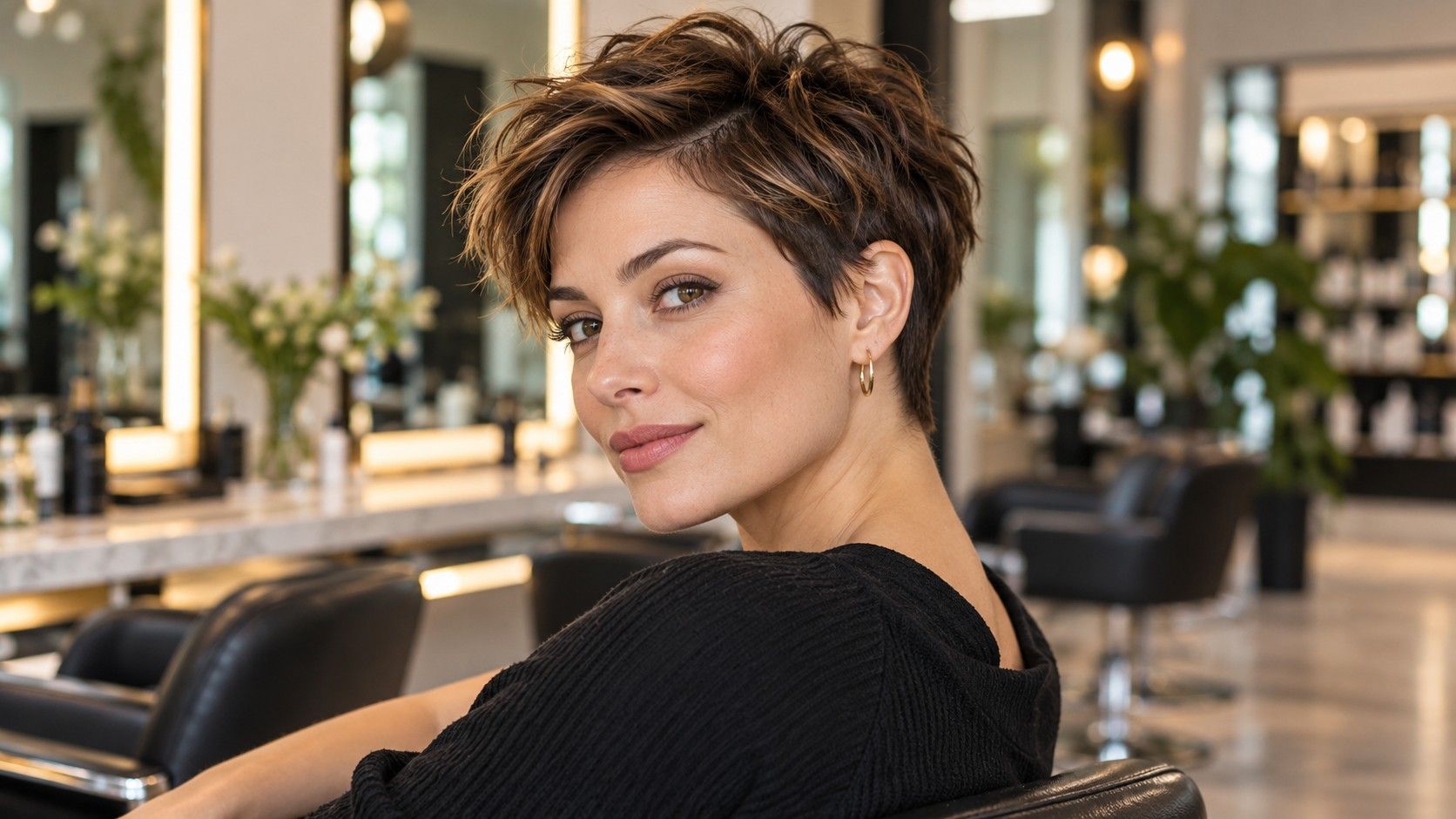
A pixie cut is a short haircut with several possible proportions: close at the nape and sides, longer through the top, cropped evenly, or left soft around the ears. A textured crop adds separation and an irregular finish; a tapered nape narrows the hairline at the back. The name covers a range, so photos from the side and back matter as much as the front.
Some pixie cut styles keep enough length on top to sweep forward or to one side. Others expose more of the ear and follow the head closely. A longer top can offer styling options but may need product or drying direction. A close crop can feel direct and light, while making the hairline and nape shape more visible.
Look at the relationship between top, sides and back. Ask whether the cut will have a soft transition, a defined undercut or a tapered nape. These choices affect how it grows out and how often the outline needs attention. A front photo alone cannot show whether the back sits close to the head or carries extra weight.
Bring references with similar hair texture and density. If you like one image’s fringe and another’s nape, say so; the stylist can combine details where they work together. Avoid choosing only by haircut name. A precise description of top length, ear coverage and side shape gives the consultation something practical to work with.
How much length should stay on top and around the ears?
Top length determines whether the hair can be swept, separated, curled or pushed back. A few extra centimeters can create flexibility, but may fall forward or need shaping around a cowlick. A shorter top dries quickly and can look defined with little product, though it offers fewer ways to change the finish. Ask to see the proposed length before the first section is cut.
Ear coverage is another useful checkpoint. Hair that covers part of the ear softens the outline and can be tucked behind it; a close side makes the shape more exposed and defined. If you wear glasses, earrings, headphones or a helmet often, mention that. These everyday details affect comfort more than a trend photo does.
The nape can be tapered close or left longer and softer. A close taper may look tidy at first but reveal growth sooner, while a longer nape can blend through a wider range of stages. Ask how the hairline grows and whether there are swirls or uneven density at the back. The stylist can shape around those patterns rather than forcing a perfectly straight edge.
If this is your first short cut, consider a staged change. You can begin with a longer pixie or crop and shorten the sides at a later appointment. Hair can always be cut shorter during the session, but returning to a bob or longer shape takes months. Agree on the point at which you will pause and review the silhouette.
How do texture and growth patterns affect the result?
Straight hair shows the silhouette clearly and may need a small amount of product to separate pieces. Wavy hair can create natural movement, but may spring up more on top than at the sides. Curly hair can form a compact shape or expand, depending on curl pattern and density. The stylist should look at your normal texture, not assume the finish will match a straightened reference.
A cowlick at the crown or hairline can push short pieces in an unexpected direction. With longer top sections, there may be enough weight to guide them; a very short cut can expose the pattern. Ask the stylist to inspect your growth before shampooing and explain whether they will leave extra length in the resistant area.
Density and strand thickness affect the feel of the cut. Dense hair may need internal shaping to sit close, while finer or lower-density hair may benefit from keeping enough length to maintain a visible outline. These are not fixed formulas. Point out where your hair feels bulky or sparse and discuss how much scalp exposure you are comfortable with.
Color, previous chemical services and breakage can also change how short pieces behave. Fragile ends may look rough when cut into a very choppy texture. If the hair has different lengths from past styling or damage, tell the stylist before choosing a highly precise crop. A practical pixie plan accounts for the hair you have now and the way it grows.
What daily styling can a pixie require?
Some pixies need only a quick rinse and finger styling; others rely on a blow-dry to place the top and flatten the sides. Ask the stylist to demonstrate the version you are likely to wear, using your own part and usual products. Watch where they apply product and how much. A cut that looks simple in the chair can feel different when you do it alone.
Styling paste can add separation or control, but too much may make short hair look greasy or stiff. Start with a pea-sized amount, warm it between your palms and work through the ends rather than coating the roots. Fine hair may prefer a lighter product; waves may need less manipulation to keep their pattern. Product needs depend on length and finish.
If using a dryer, keep it moving and use a moderate setting. Direct the roots while damp, then finish with fingers once the hair is mostly dry. Heat protection is still useful on short hair because repeated high heat can affect the same small sections. A diffuser may suit waves or curls better than a concentrator nozzle.
Plan for the days when you do not want to style. Ask whether the cut can be worn forward, swept back or allowed to dry with texture. The ability to change the part or use a headband can make a short haircut feel more versatile. Your stylist can leave enough length in selected areas to give those options.
How often should you trim and what does grow-out involve?
Pixie haircut maintenance varies with how close the sides and nape are cut and how sharp you want the outline. A close taper can look different as it grows over a few weeks; a longer crop may keep its shape for longer. Rather than relying on a standard interval, ask when the back or side will begin to feel out of balance for your specific cut.
Grow-out usually passes through several shapes: a close crop, a fuller pixie, then a longer top or short bob. The awkward stage depends on where the length is concentrated. A stylist can plan intermediate trims that preserve useful length while tidying the nape and ears. Tell them whether your goal is to maintain the pixie or eventually grow it longer.
At home, avoid trimming the nape or around the ears without a clear plan. Small uneven sections can change the outline, and the back is hard to see. If you want to reduce salon visits, ask for a shape that grows softly rather than one that depends on a crisp edge. This is a design choice to make before the cut.
Before booking, discuss top length, side closeness, ear coverage, nape upkeep and the styling you will actually do. Ask what the shape may look like after several weeks and what the next haircut could be if you change your mind. A pixie is not automatically low maintenance; it is a good fit when its styling and trim rhythm suit your preferences.